The nature of the place: A Wimbledon home drawn from its surroundings
Art & Culture Interior Design
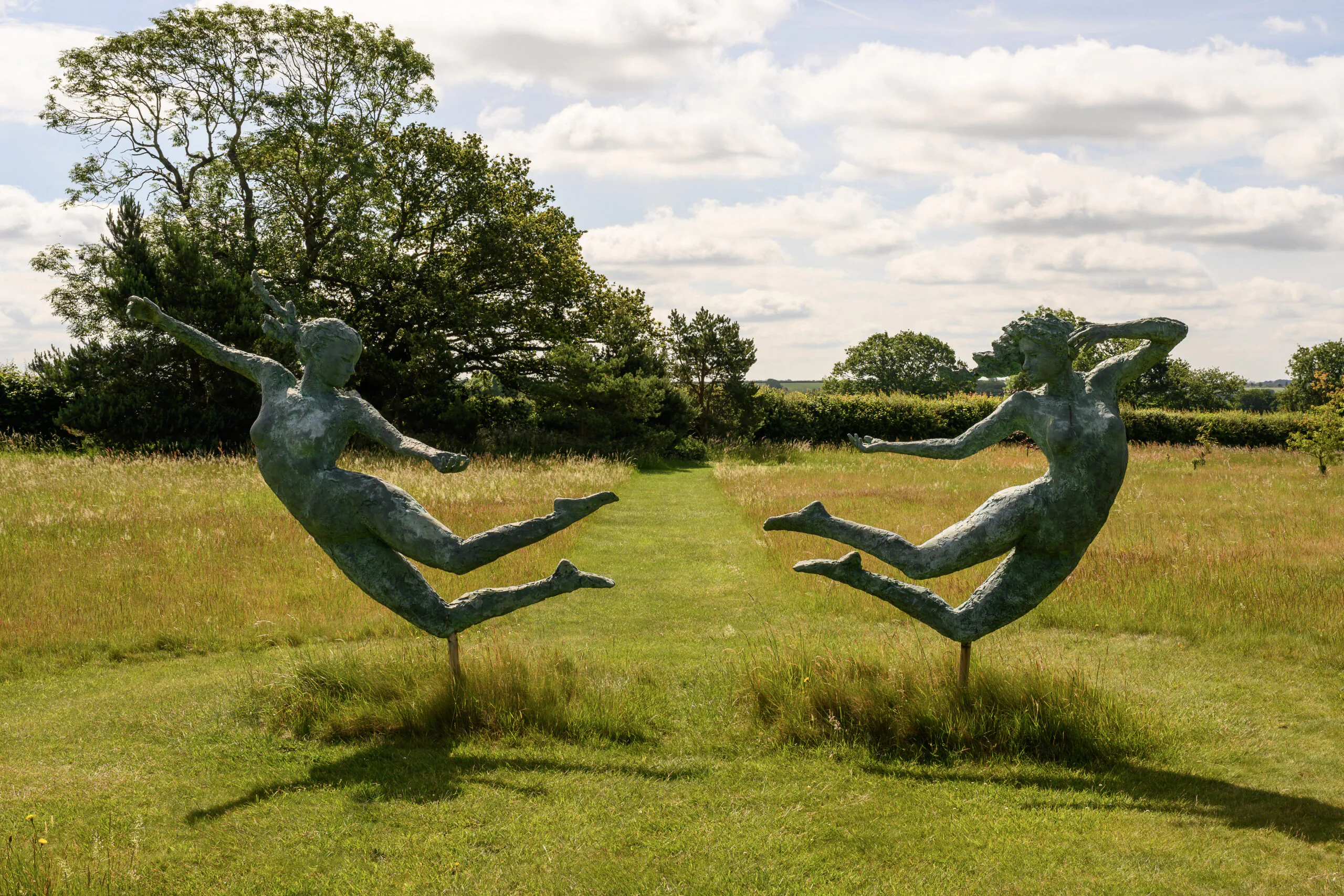
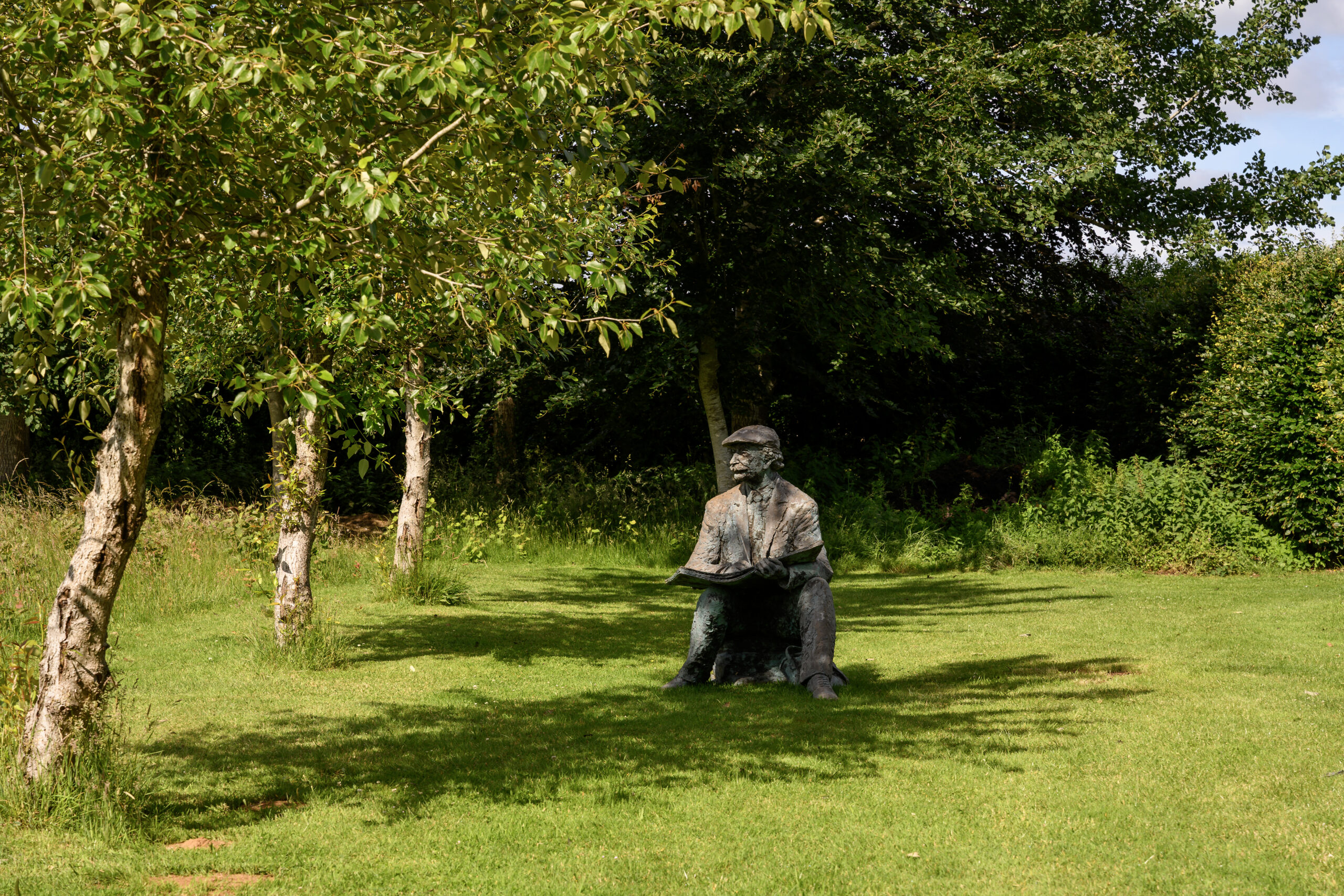
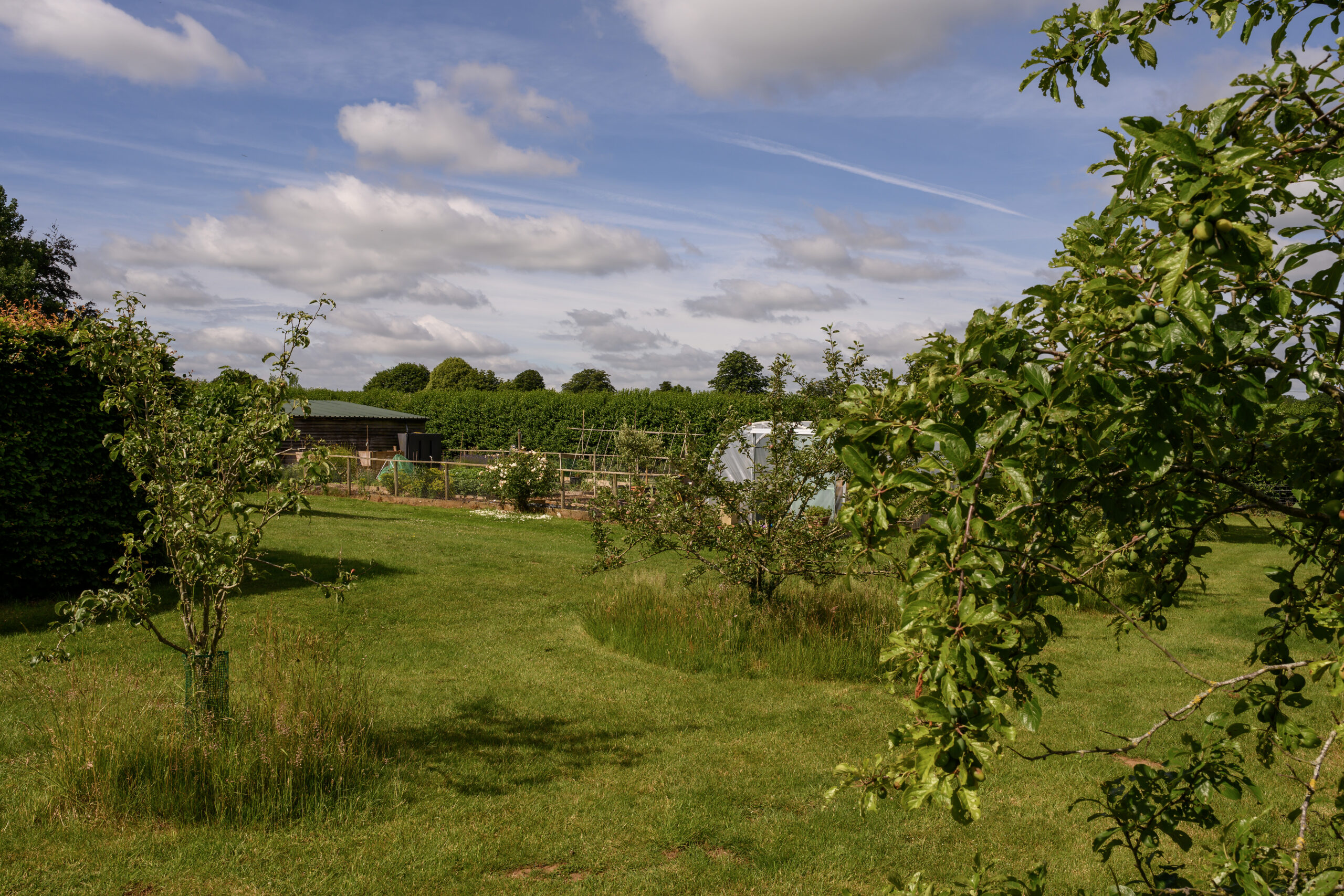
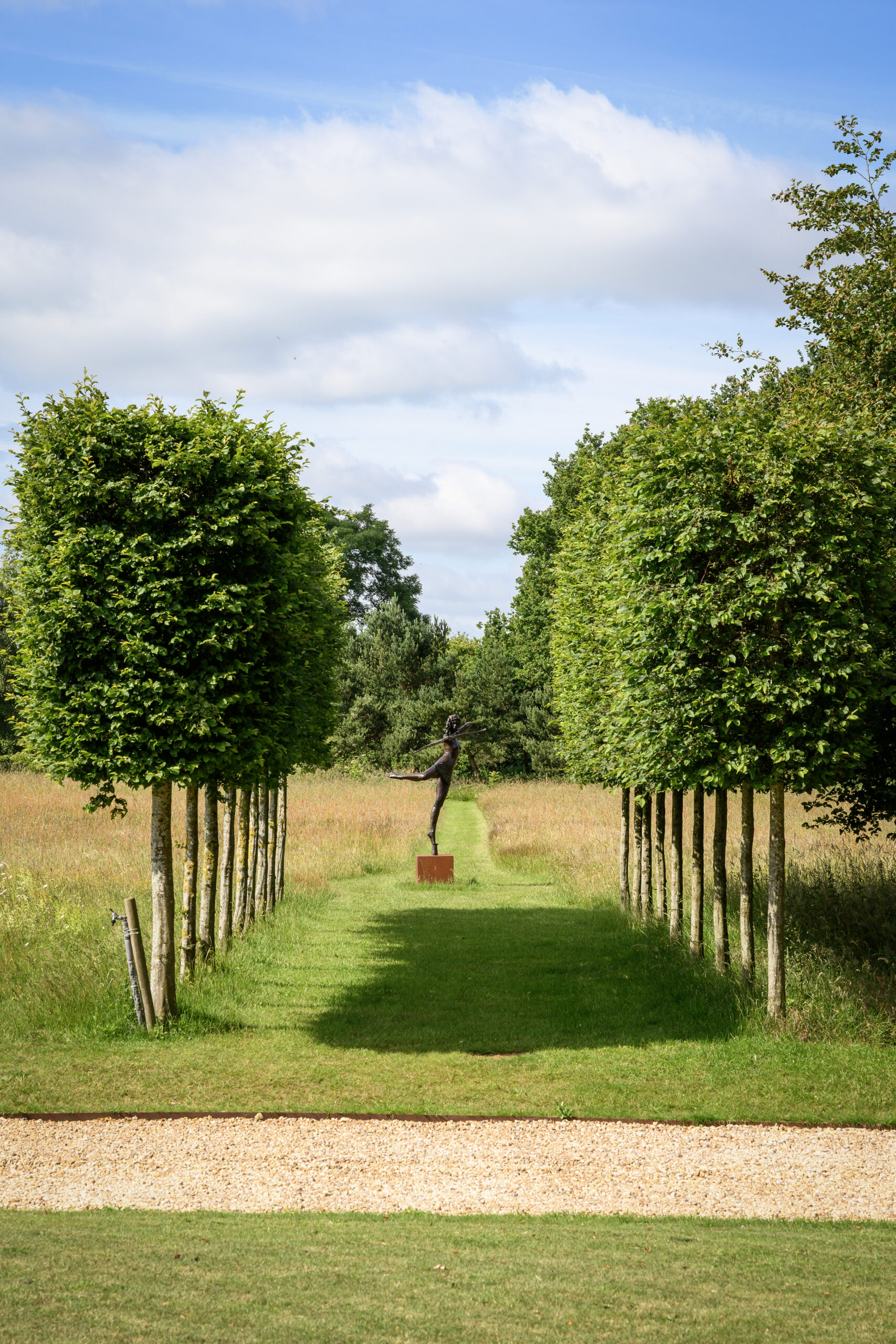
Morning light slips through the glass-fronted extension of Tewfield Manor, illuminating bookshelves, stone floors and the quiet arrangement of sculptures beyond the windows. Outside, the grounds unfold across 13 acres of Oxfordshire countryside – topiary-lined avenues, grassy mounds and open lawns punctuated by bronze figures caught mid-motion. For sculptor David Williams-Ellis, the house is a living studio where landscape is in constant dialogue with art.
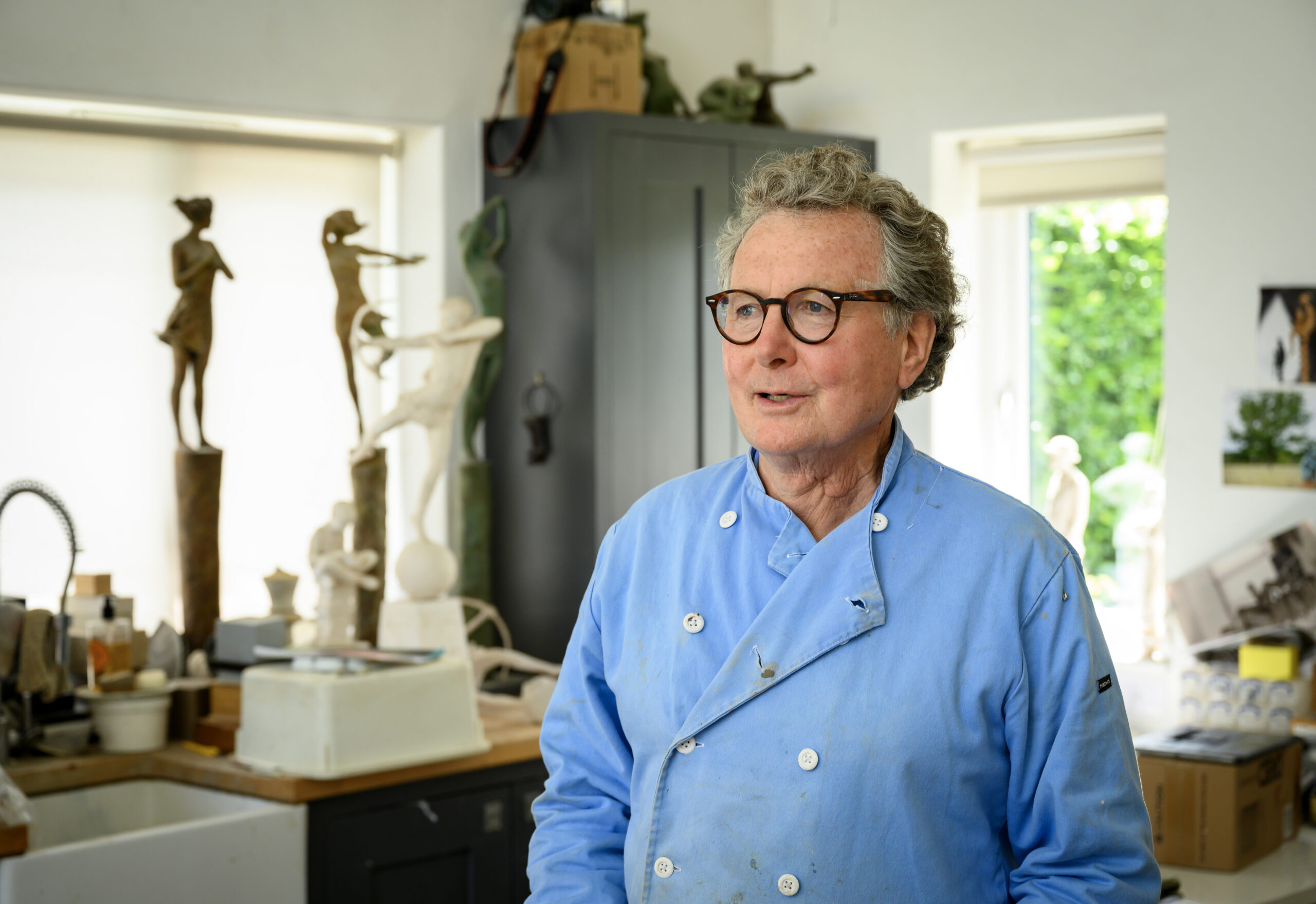
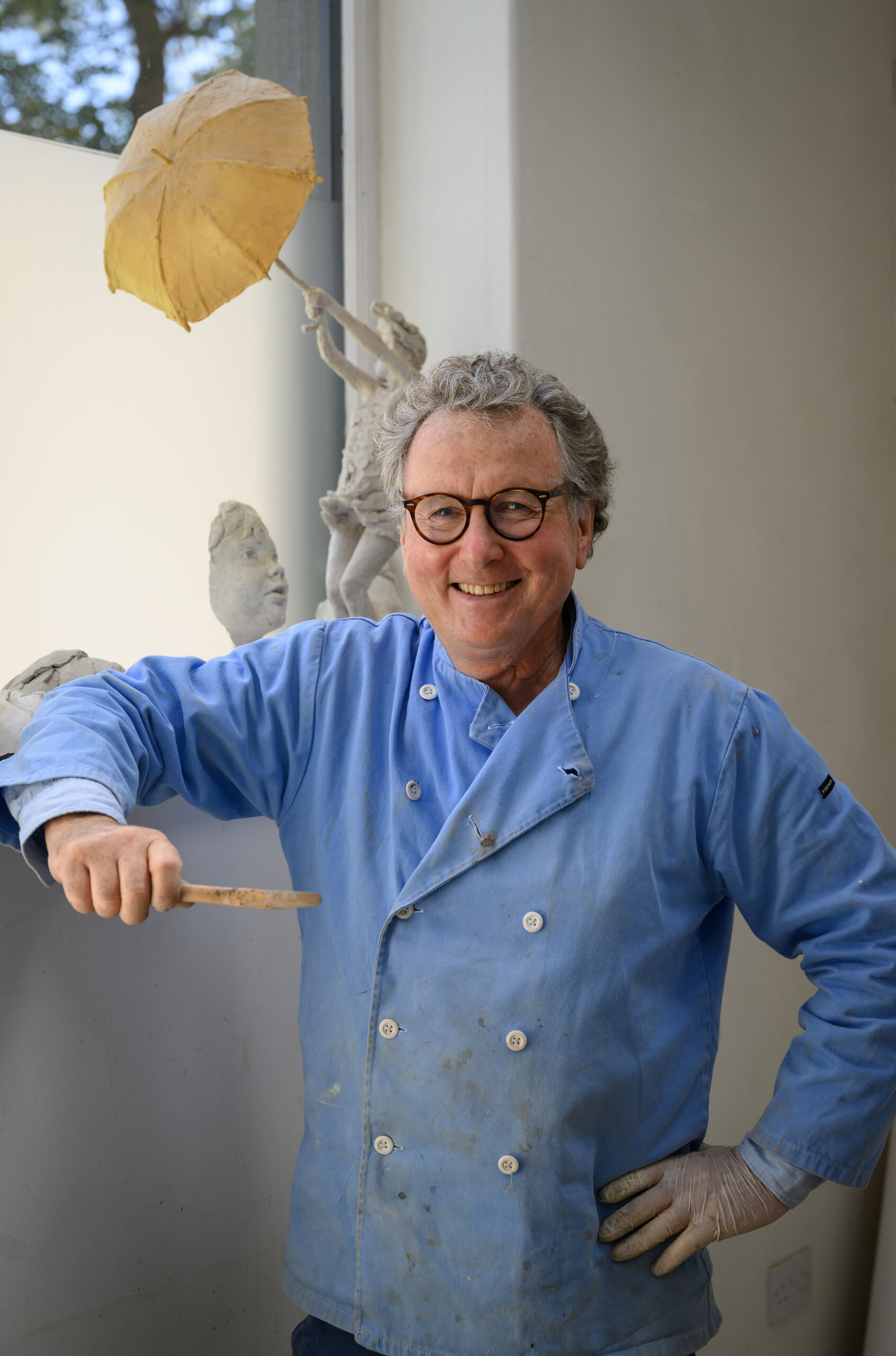
“I built my studio when I moved here,” he explains. “I surrounded the place with sheds and workspaces that have grown over the years.” The finished workshop now sits beside the main house, a soaring whitewashed volume built to accommodate the scale of his art. “There’s a stainless-steel girder across the top. I can lift about a tonne and a half – sometimes two. For sculpture, that’s incredibly useful.”
The space feels both industrial and contemplative: clay studies resting on pedestals, bronze maquettes lining shelves, larger works paused in creation. “It’s the human figure that really excites me,” he says. “I love trying to capture energy and movement – that moment where something suddenly feels alive.”
David grew up in a creative family. His parents were painters, while his great-uncle – the architect Clough Williams-Ellis – designed the celebrated village of Portmeirion. In his youth, he spent hours shaping figures from sand and plasticine. The decisive point came at school, when an art teacher encouraged him to experiment with sculpture.
Training followed in Florence and London, before spending formative years with traditional craftsmen in the marble studios of Pietrasanta, in Italy’s Carrara mountains. “I probably learned more there than I would have in many art schools,” he reflects. By the age of 25 he had exhibited internationally, and today his catalogue includes both public monuments and private commissions.
Speaking about his practice, it’s clear that patience is key. “If you stare at something for too long you lose perspective,” he explains. “So, I often walk away from a piece completely and come back later. It’s like writing a letter – you write it in the evening and read it again the next morning when your head is clear.”

“When you’re sculpting someone, there’s a relationship between you and the model – the conversation you’re having, the atmosphere in the room. That becomes part of the finished piece.”
David Williams-Ellis
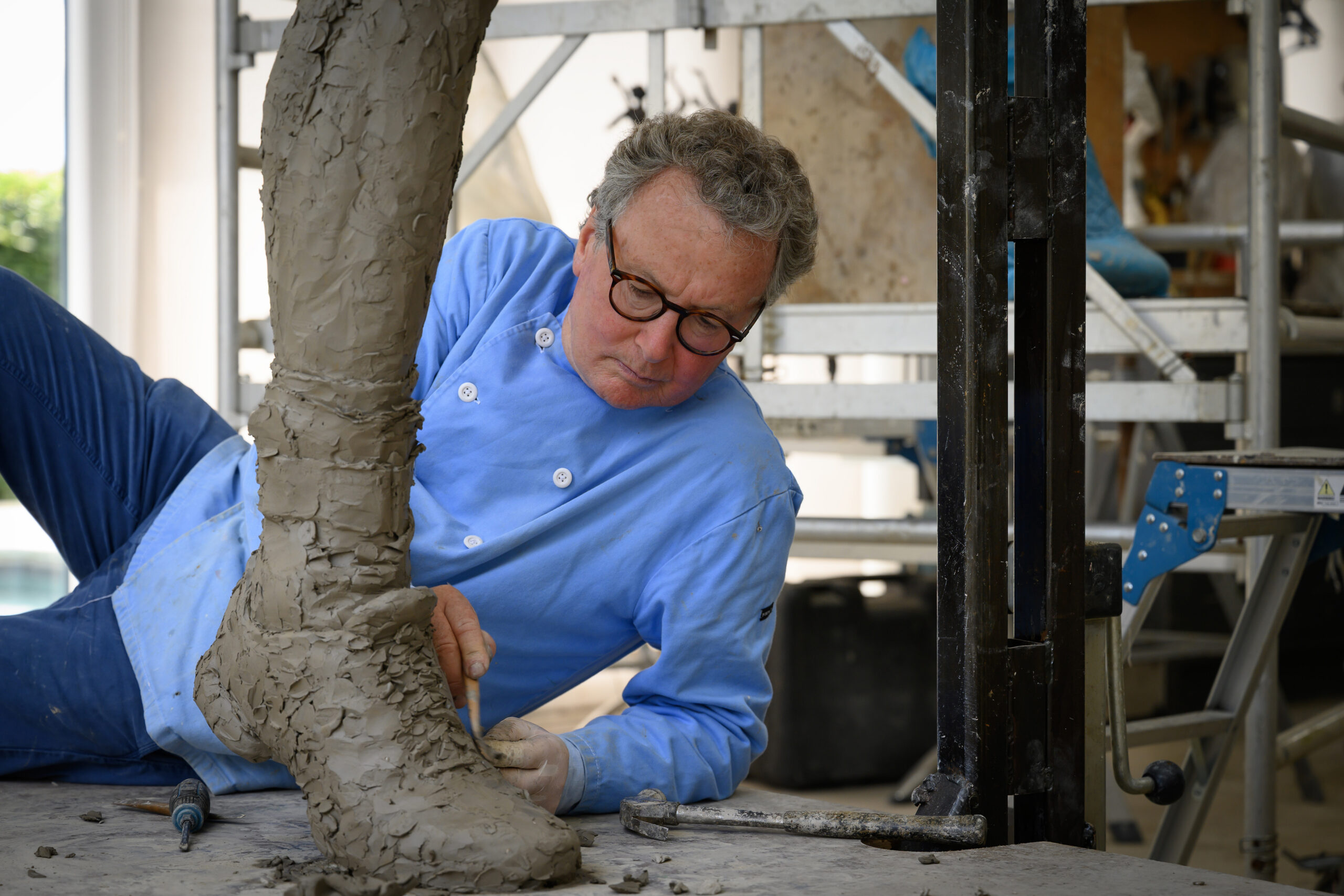
If the studio is where the work takes shape, the grounds of Tewfield Manor are where they find their place. “The great thing about here is that it’s like an unpainted canvas,” David says. “I can move pieces around and see how they work.”
Scale is crucial, he explains. “If a sculpture is too far away from a building it gets lost. But bring it closer and suddenly it fills the space. You can draw the eye through a landscape, guide people towards a view and create an element of surprise.”
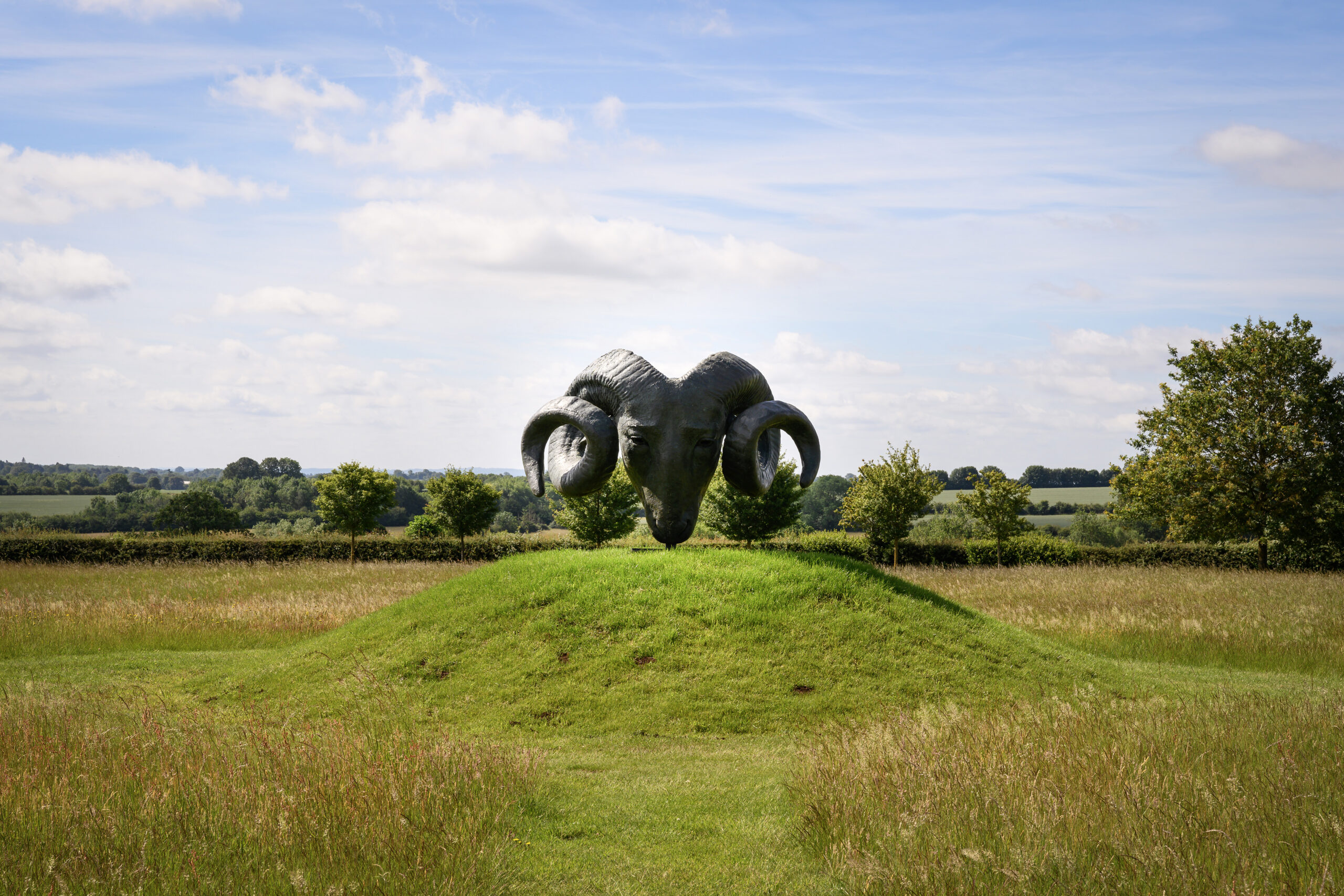
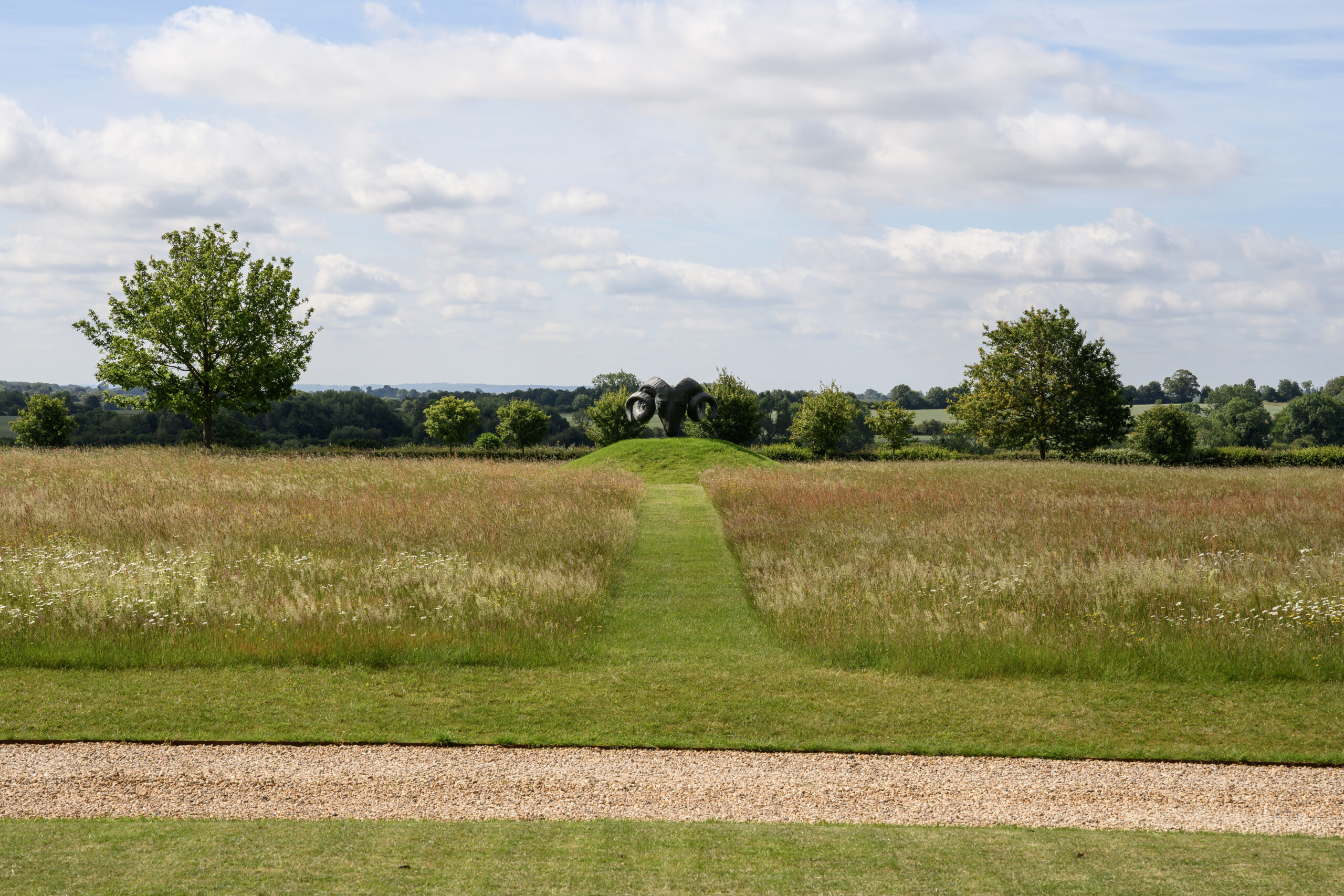
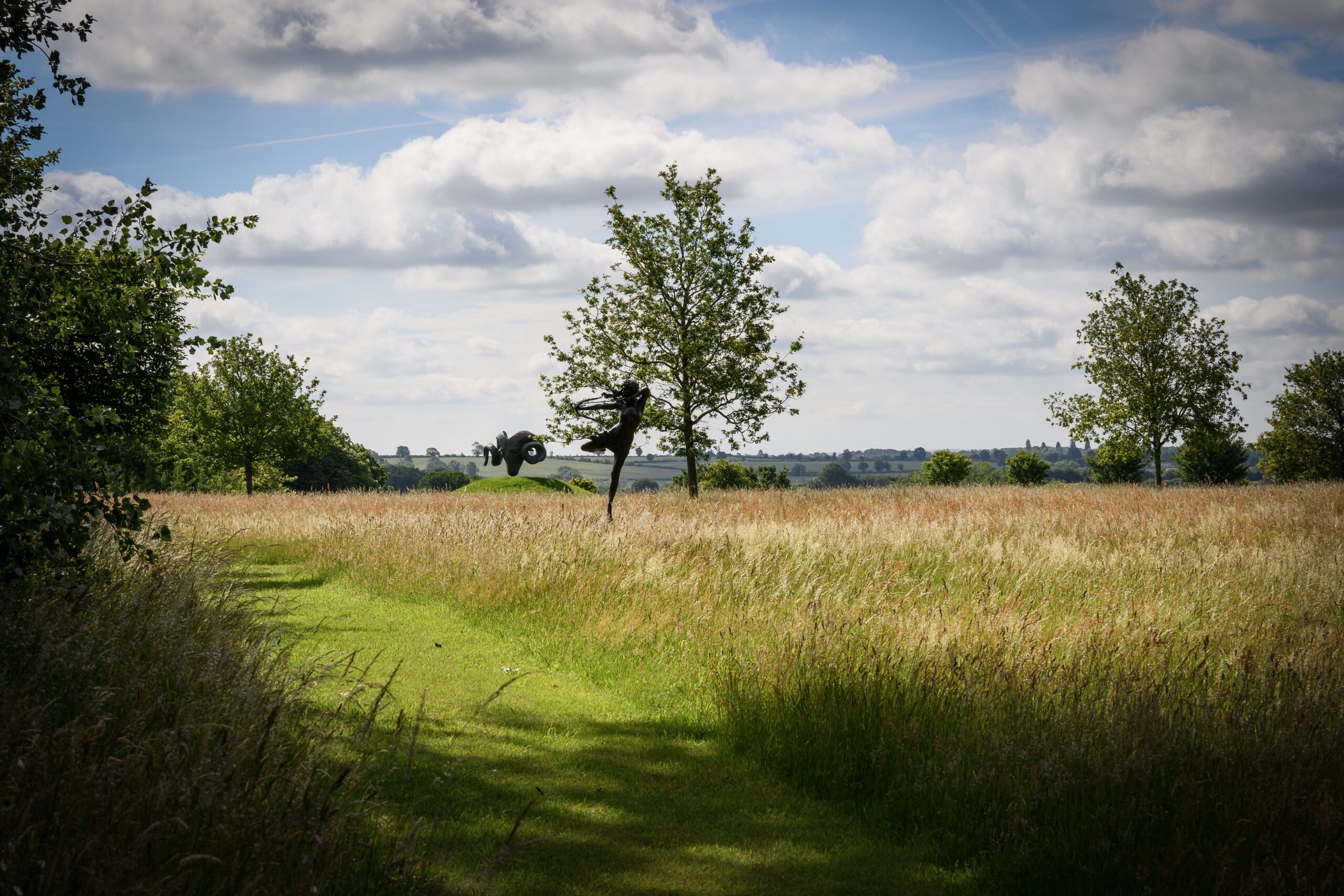
With its curving horns and steady gaze, a 10-foot bronze ram commands the horizon, visible from several fields away. The piece required two tonnes of clay built over a tonne of steel before it was cast in bronze; now, its powerful silhouette rises against the skyline at sunset.
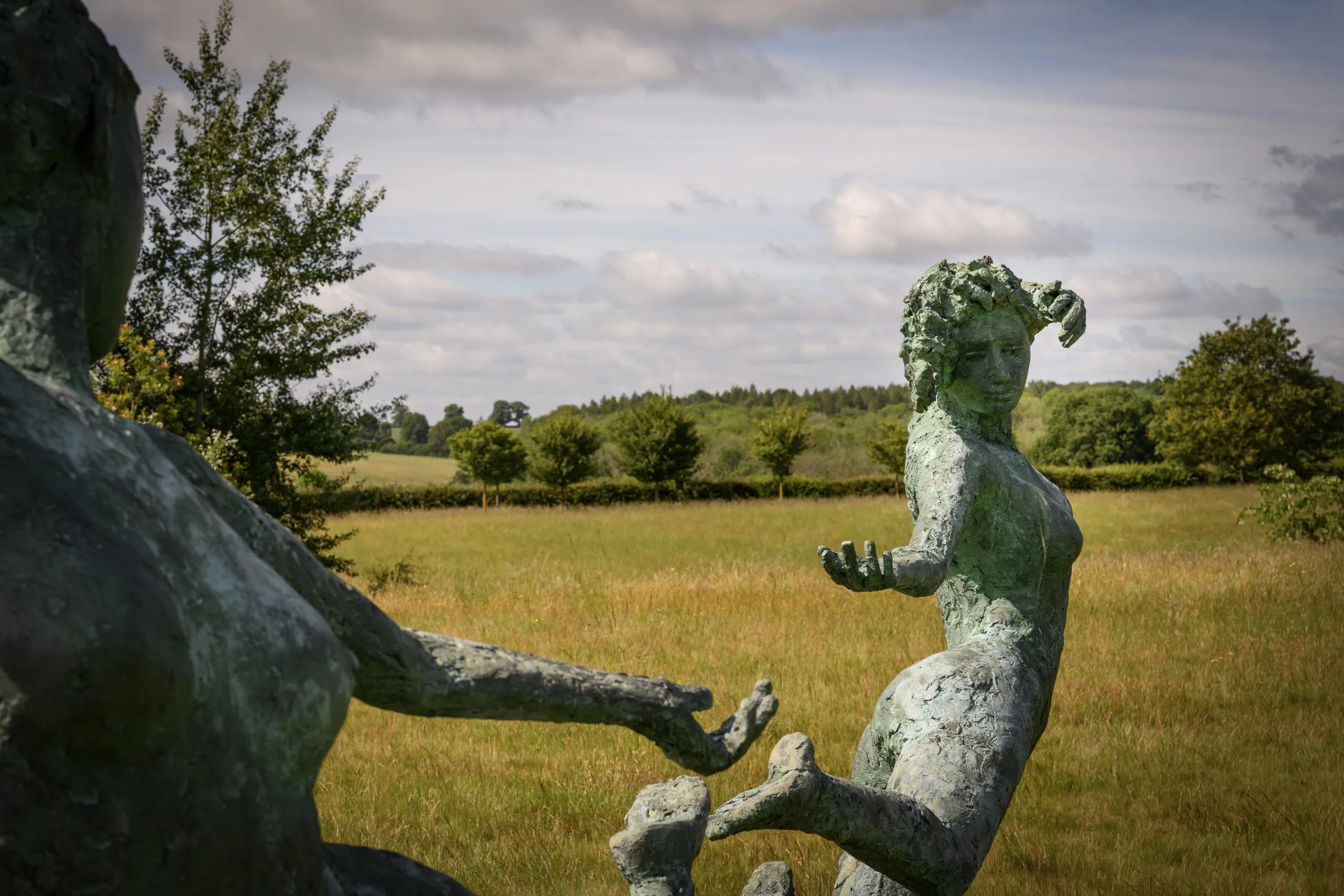
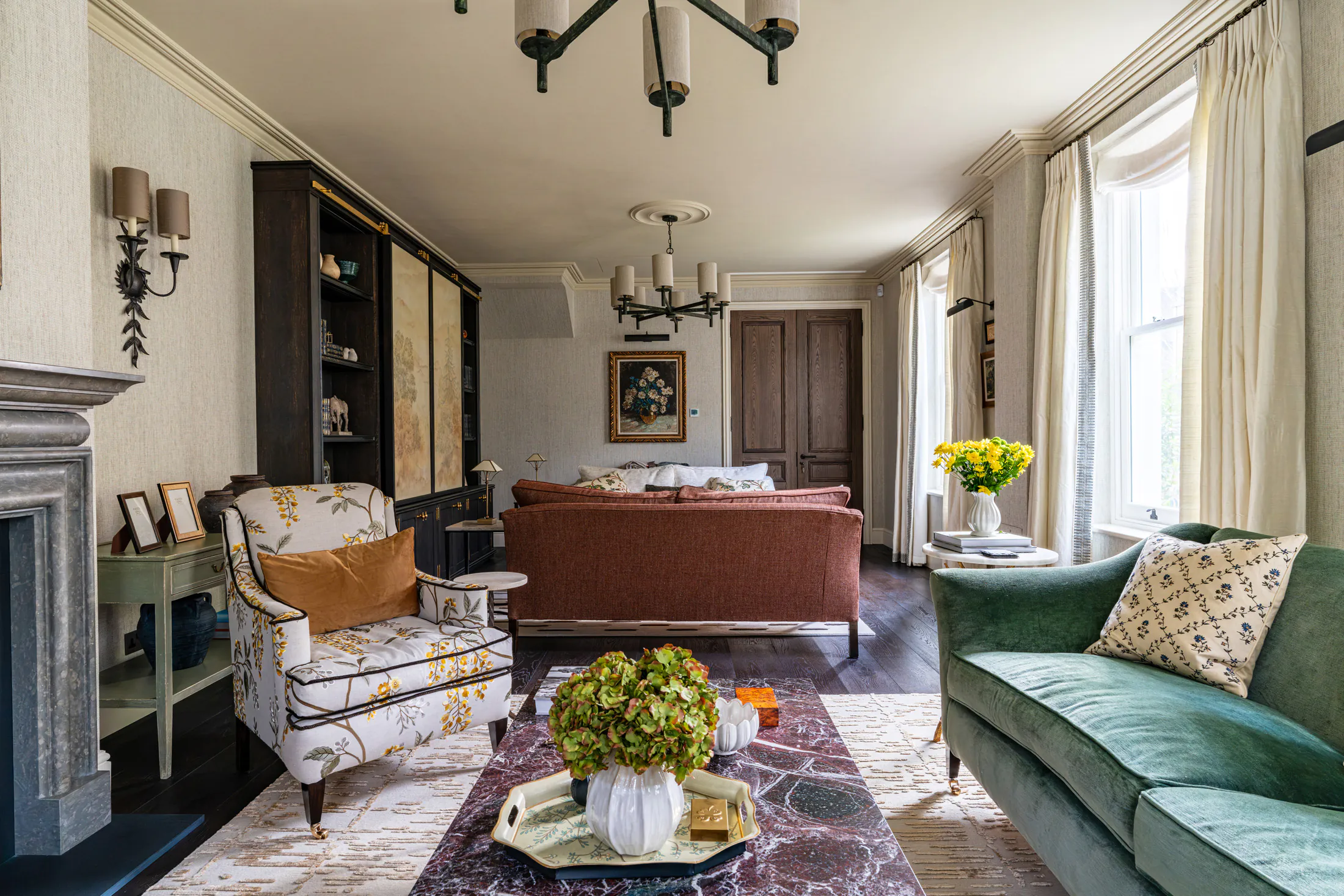
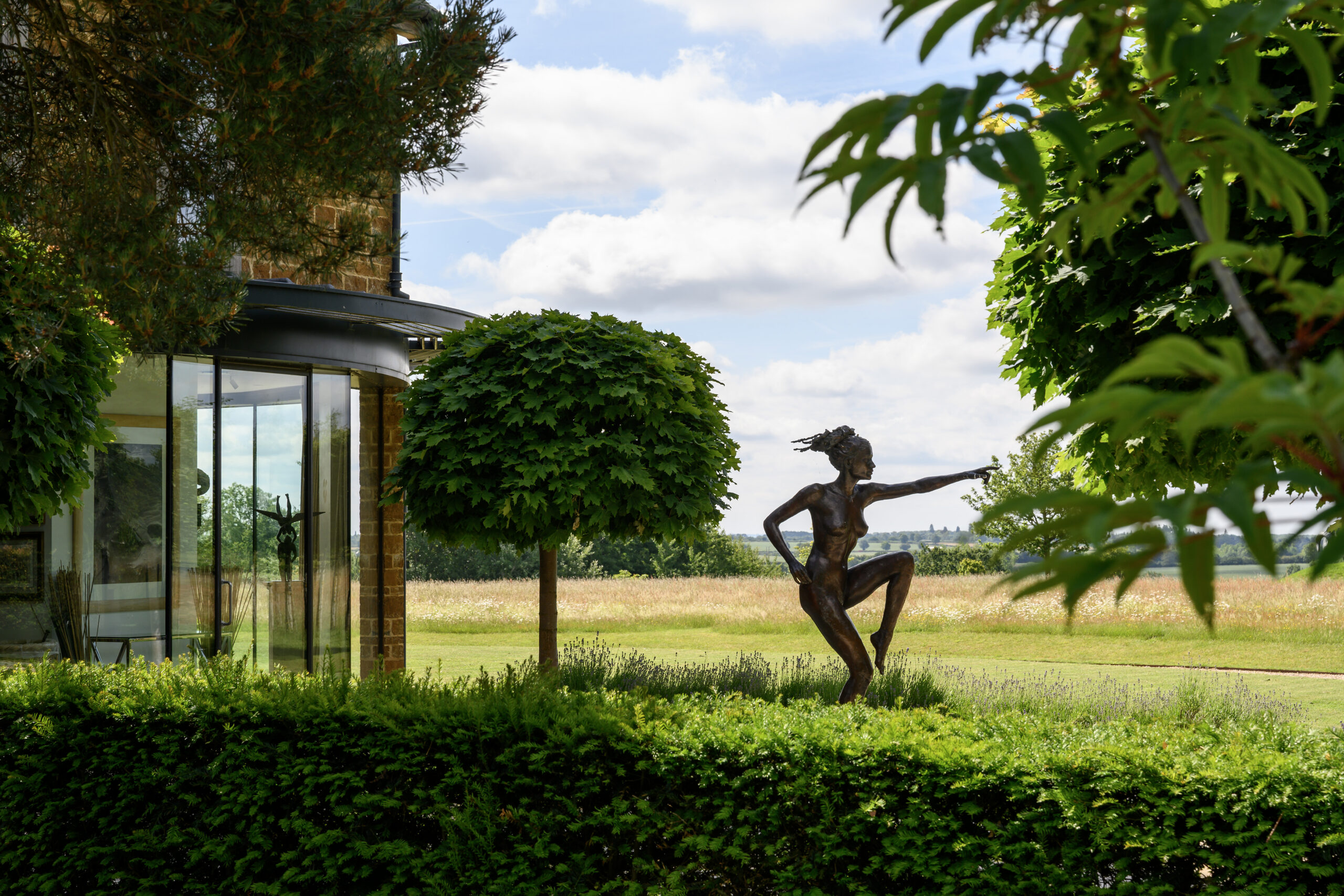
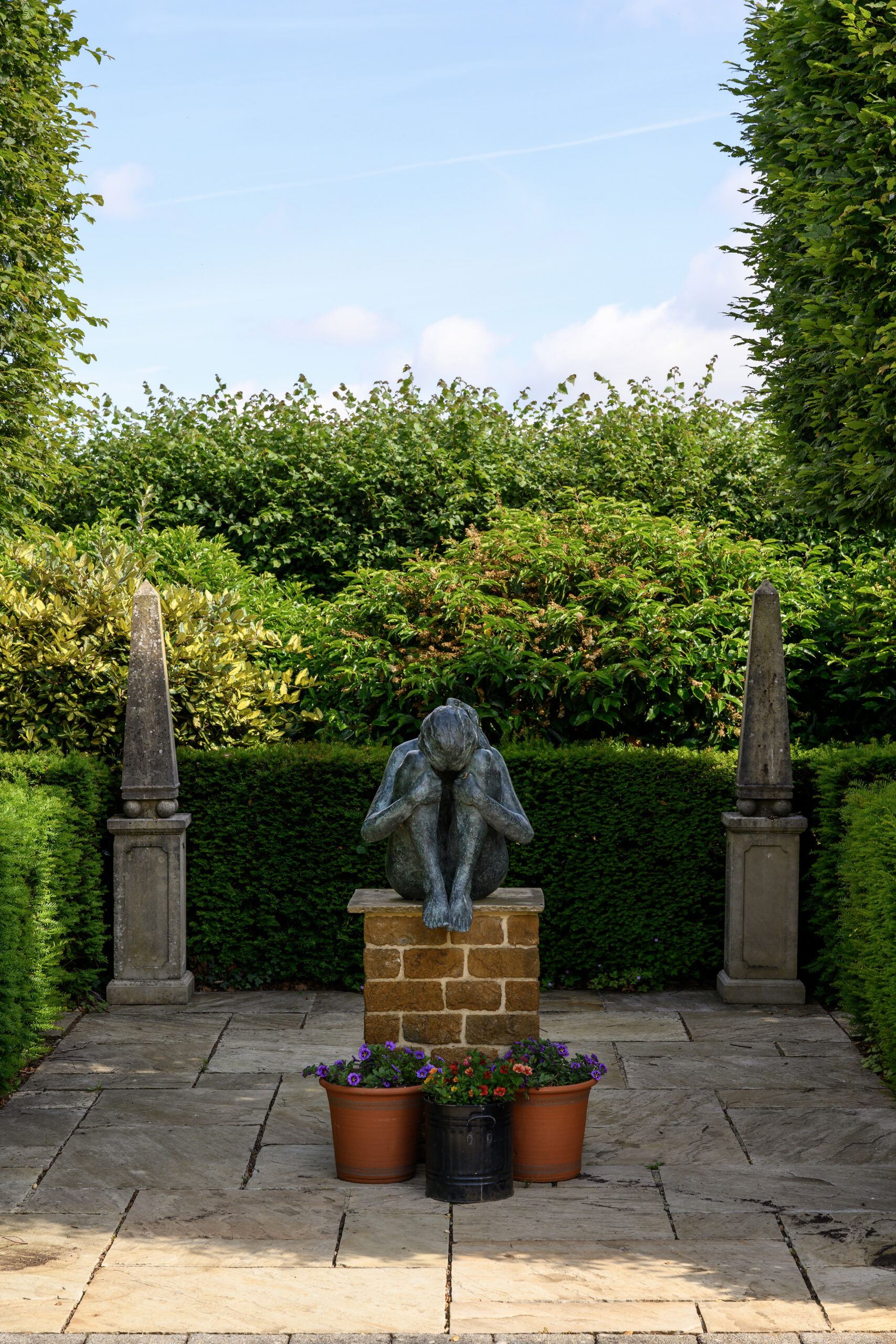
Elsewhere, another of David’s sculptures takes a lighter, more lyrical form. Modelled on a dancer, the figure appears caught in a moment of suspended motion. Inside the house, smaller bronzes offer quieter focal points – studies of figures and portraits that echo the larger works outside while bringing the same sense of movement into the interiors.
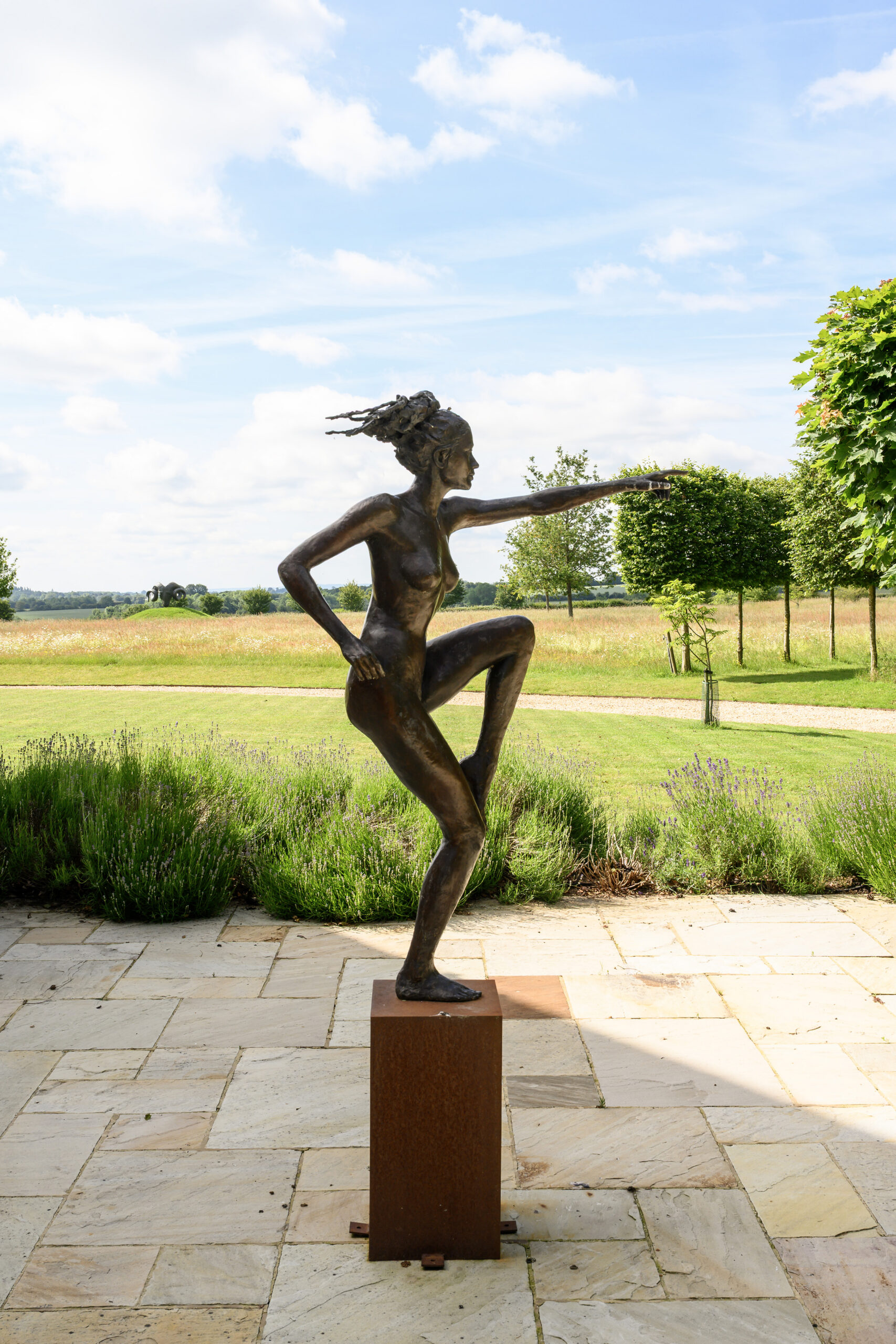
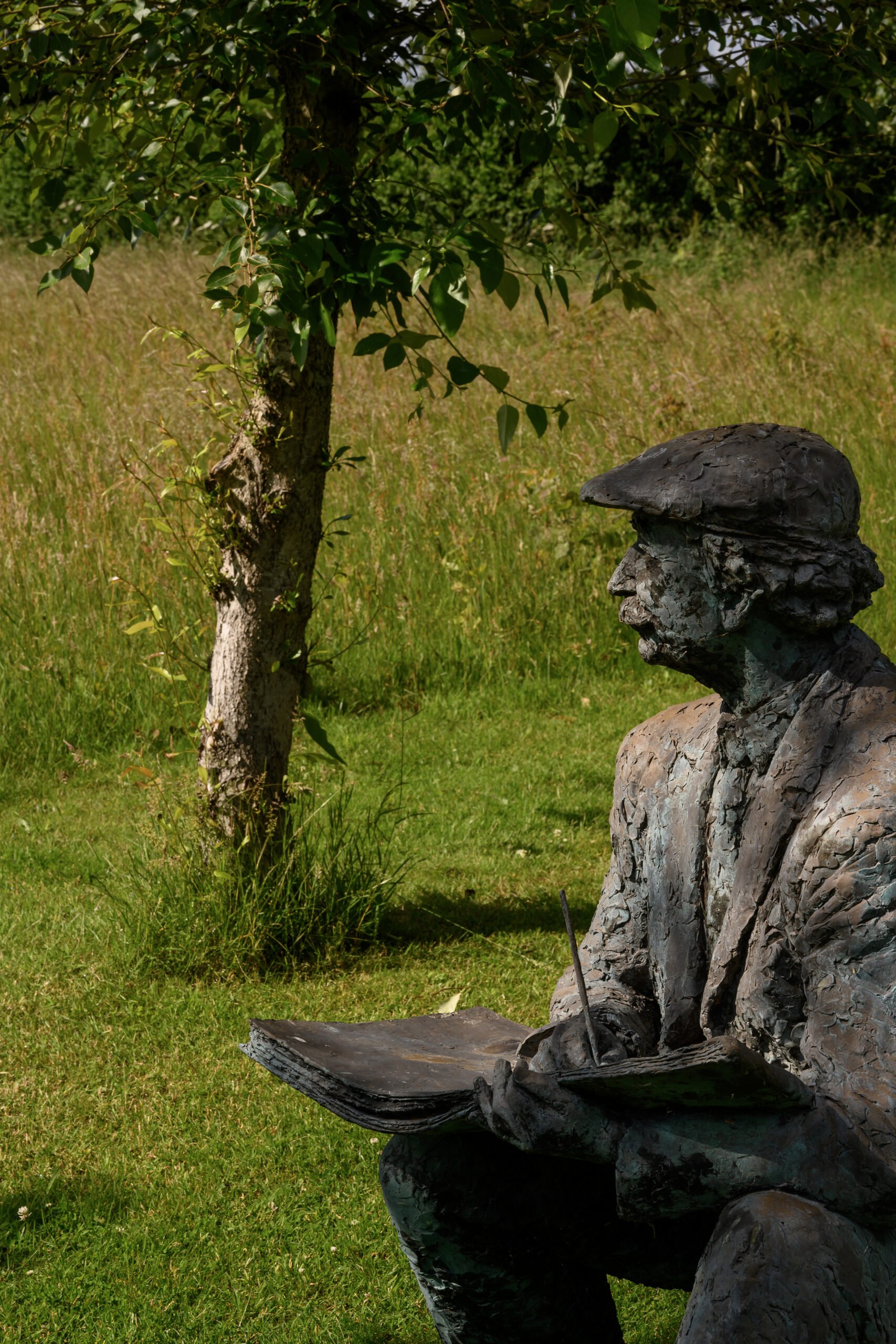
“With sculpture you can draw the eye through a landscape, guide people towards a view and create an element of surprise.”
David Williams-Ellis
Having lived in Ireland, Wales and the Eden Valley in northern England, David is no stranger to dramatic scenery, but the Cotswolds offers a particular balance: “It’s quintessential England in many ways, especially in spring and summer,” he says. Nearby villages such as Great Tew bring quiet charm, while creative hubs like Soho Farmhouse provide an unexpected social energy. For collectors visiting the studio or discussing commissions, the location proves ideal: close enough to London galleries yet firmly rooted in countryside tranquillity.
From inside, the gardens always come back into focus. “When you look out from the house, you’re naturally pulled into the environment,” David muses. As the afternoon sun softens across the lawns, the sculptures seem to shift with it – figures cast in bronze yet full of life. Here, sculpture is not simply placed in the landscape but allowed to become part of it.