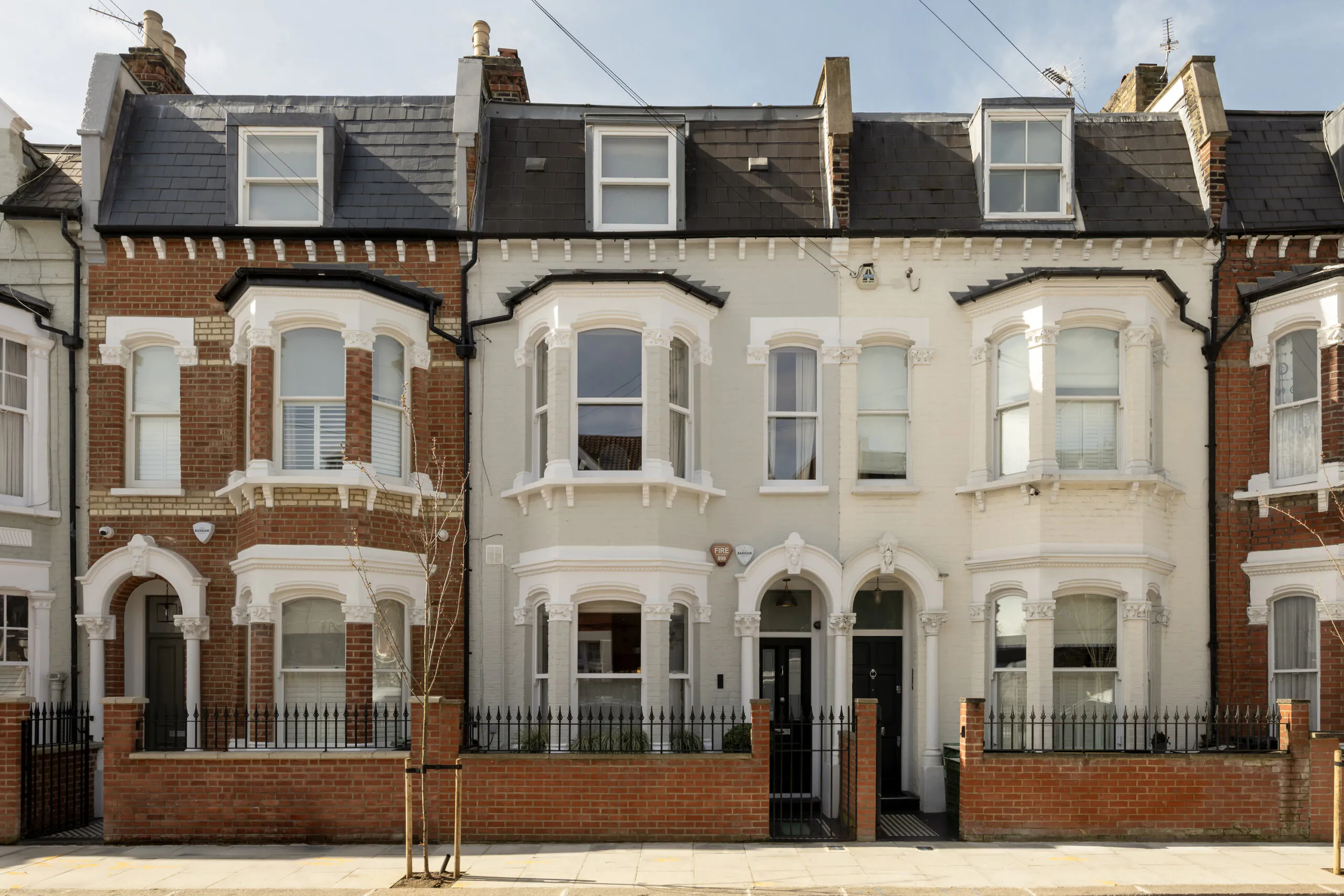
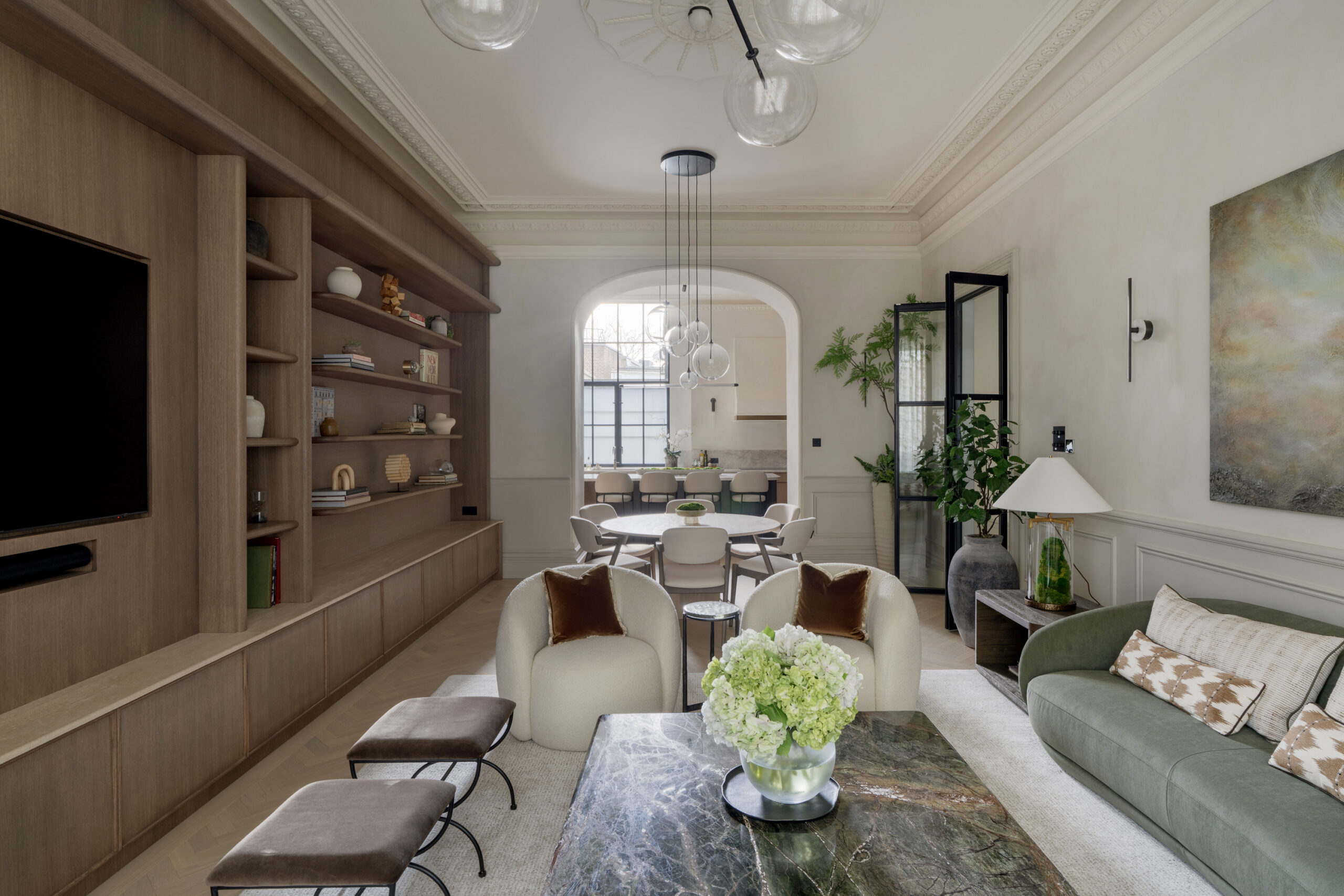
Escaping the noise: Turning down the volume at Cornwall Gardens
Architecture Interior Design
Most people, when deciding to renovate a family home, would not immediately think to call a studio whose portfolio spans some of London’s best restaurants and bars. Having traded a rustic home on the edge of a Canadian forest for a stripped-back Victorian townhouse that was “the antithesis of everything they’d loved before”, the owners of Broomhouse Road were not most people.
“We may be better known for our hospitality work, but the same design mindset carries over naturally to homes,” explains Run For the Hills studio co-founder Anna Burles. “Our residential transformations range from city apartments to countryside retreats. When it comes down to it, it’s still about how the space greets you, how the light transitions from day to night, how nooks and different corners can bring people together.”
In Fulham, that logic was paired with a modern-rustic direction inspired by the family’s Canadian roots. “They missed the warmth and character of their previous home, but it was important that we didn’t try to recreate what they’d left behind,” Anna muses. “We wanted to capture the same feeling in a completely different context. The word that kept coming back to us was sanctuary.”
No stranger to the concept, her east London studio – run alongside co-founder Christopher Trotman – is responsible for an enviable roster of hospitality spaces including the Daisy Green Collection, Kricket restaurants and Tivoli cinemas. To their residential work, the studio brings a specific and slightly unusual intelligence. Where others might consider aesthetics first, Anna thinks about how rooms perform. “At what point in the day does it come into its own? What does it need to do at eight in the morning that’s different from what it needs to do at eight in the evening? These are the questions really worth answering,” she insists.

They missed the warmth and character of their previous home, but it was important we didn’t try to recreate what they’d left behind. We wanted to capture the same feeling in a completely different context.
Anna Burles, interior designer
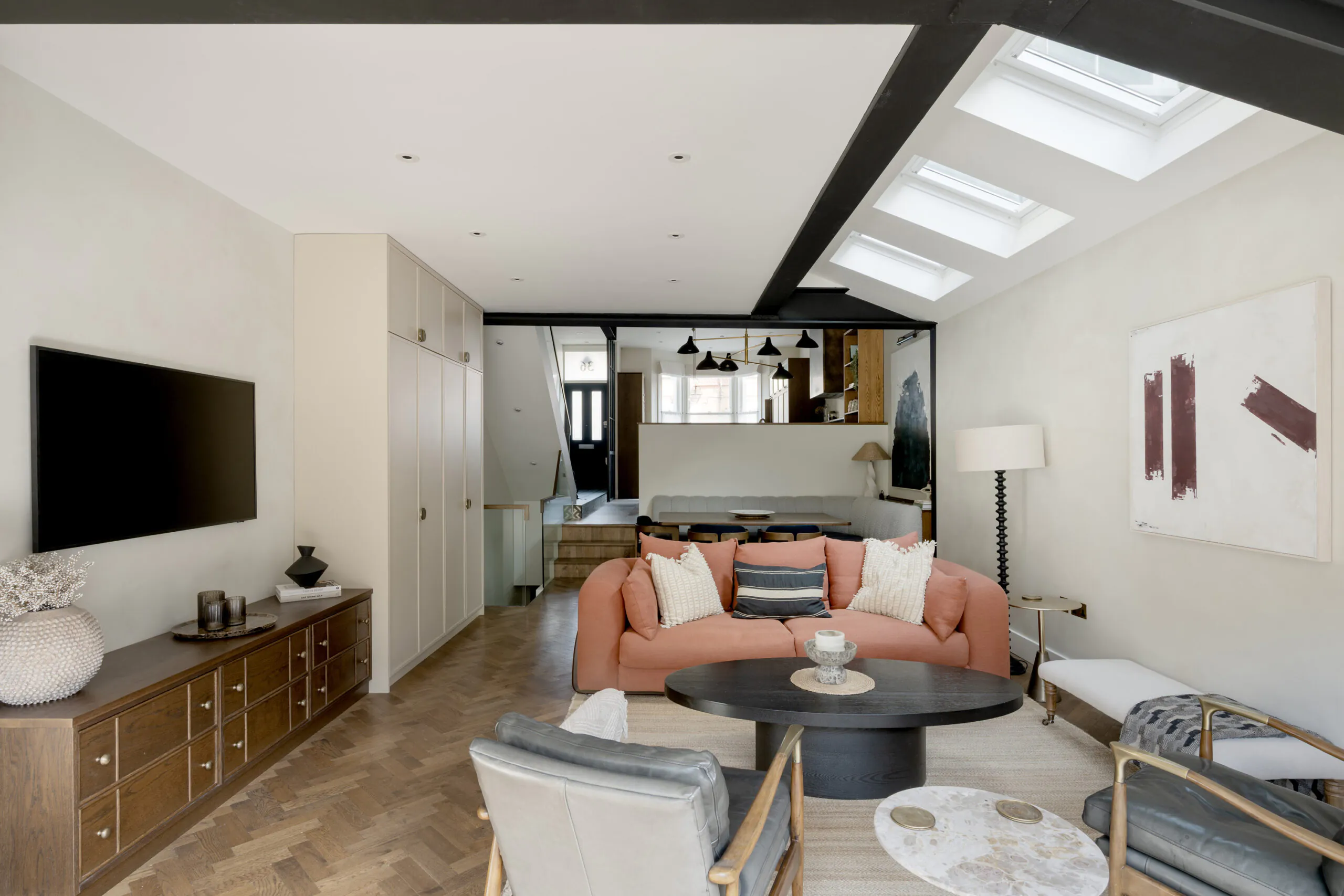
At Broomhouse Road, that thinking runs through every decision, from the structural to the almost imperceptibly small. The ground floor is where the programming is most legible – and most enjoyable. A single partition wall, the one significant structural move of the whole project, transforms how the space works.
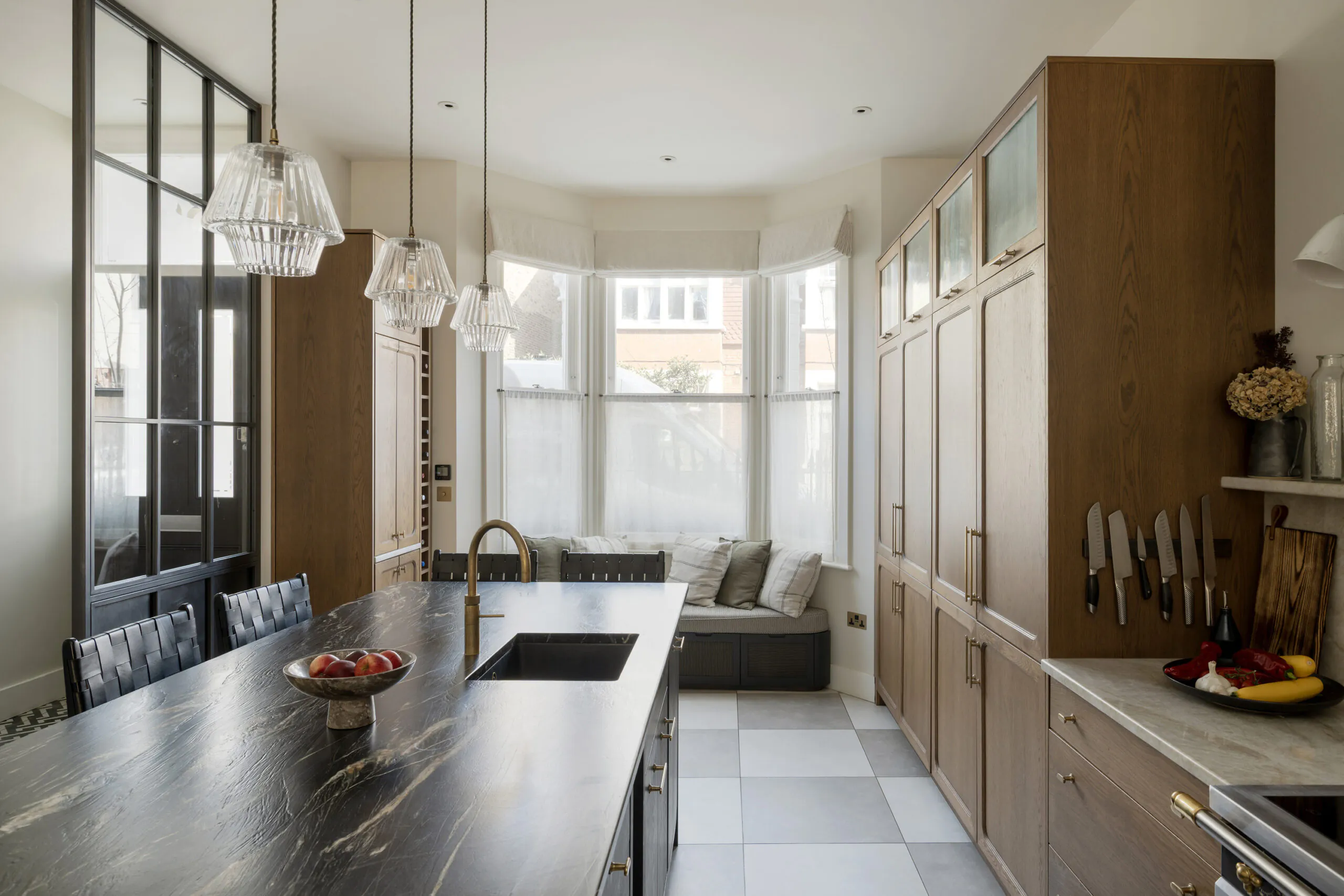
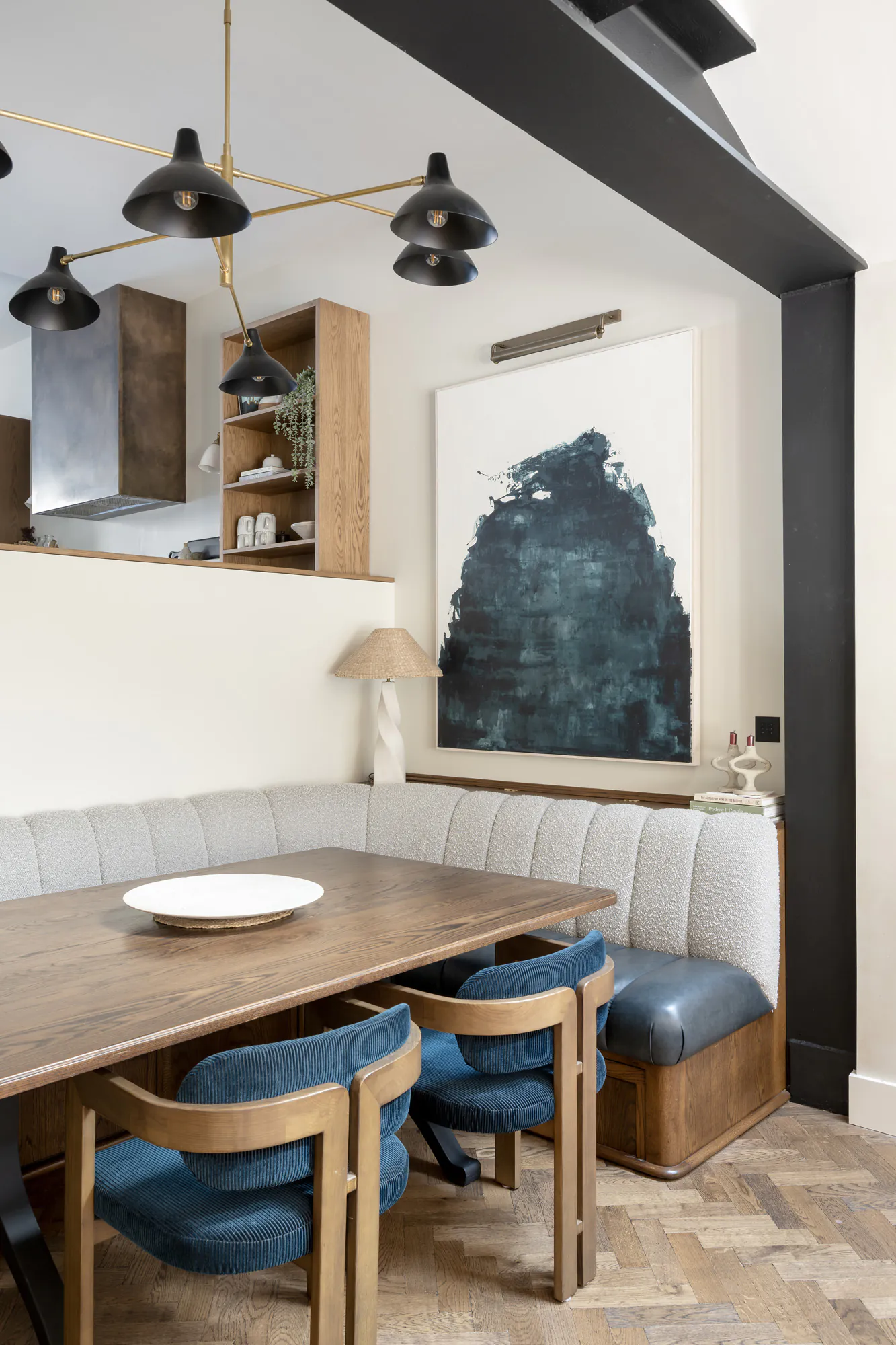
Extra cabinetry and a second sink on the kitchen side; on the other, a dining banquette that has since become the home’s undisputed gravitational centre. Anna is precise about what a banquette has to be – “set up properly for dining, squishy enough to be comfortable, but not so sofa-like that you sink uncomfortably down” – because she’s made enough of them to know.
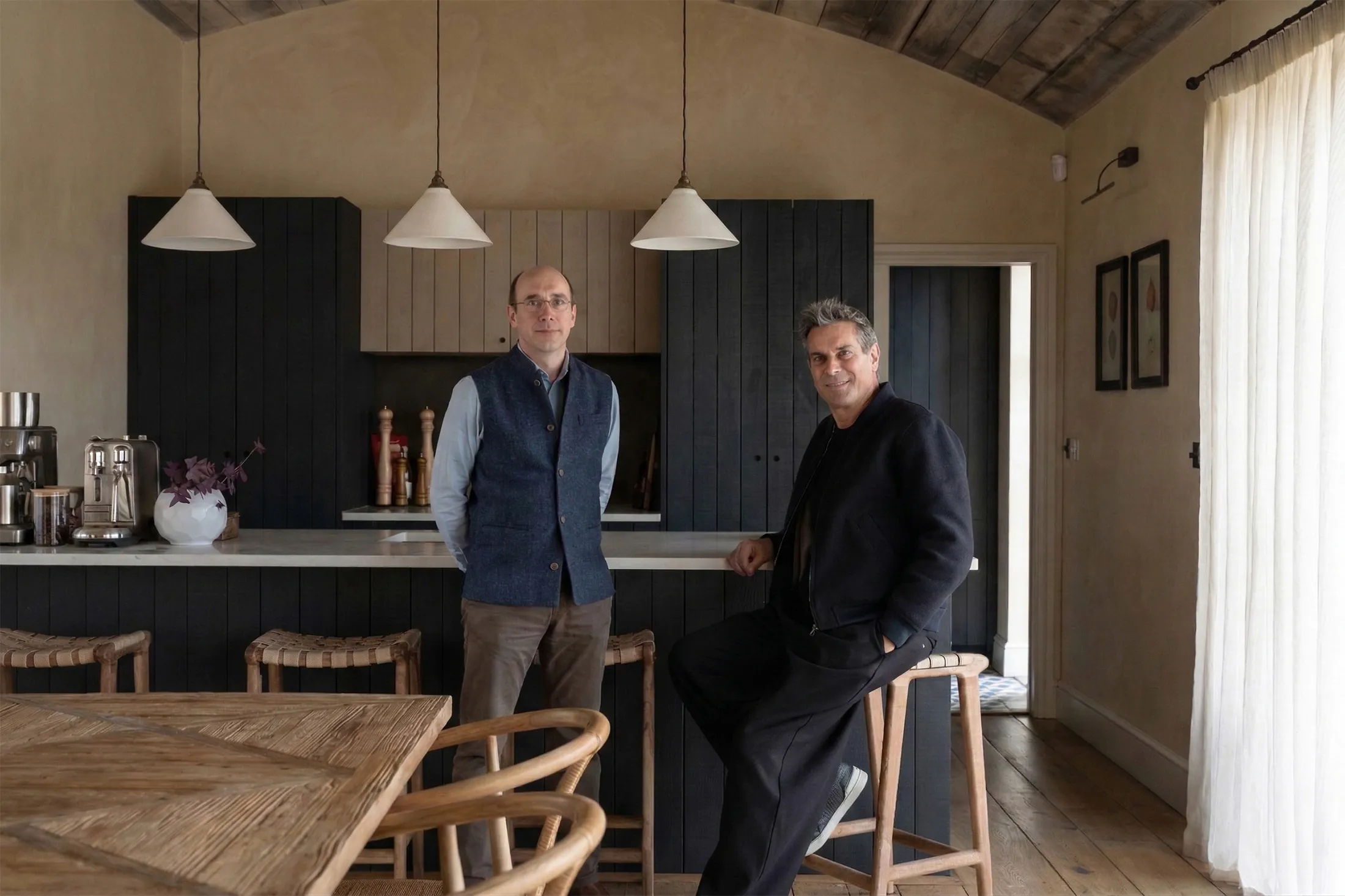
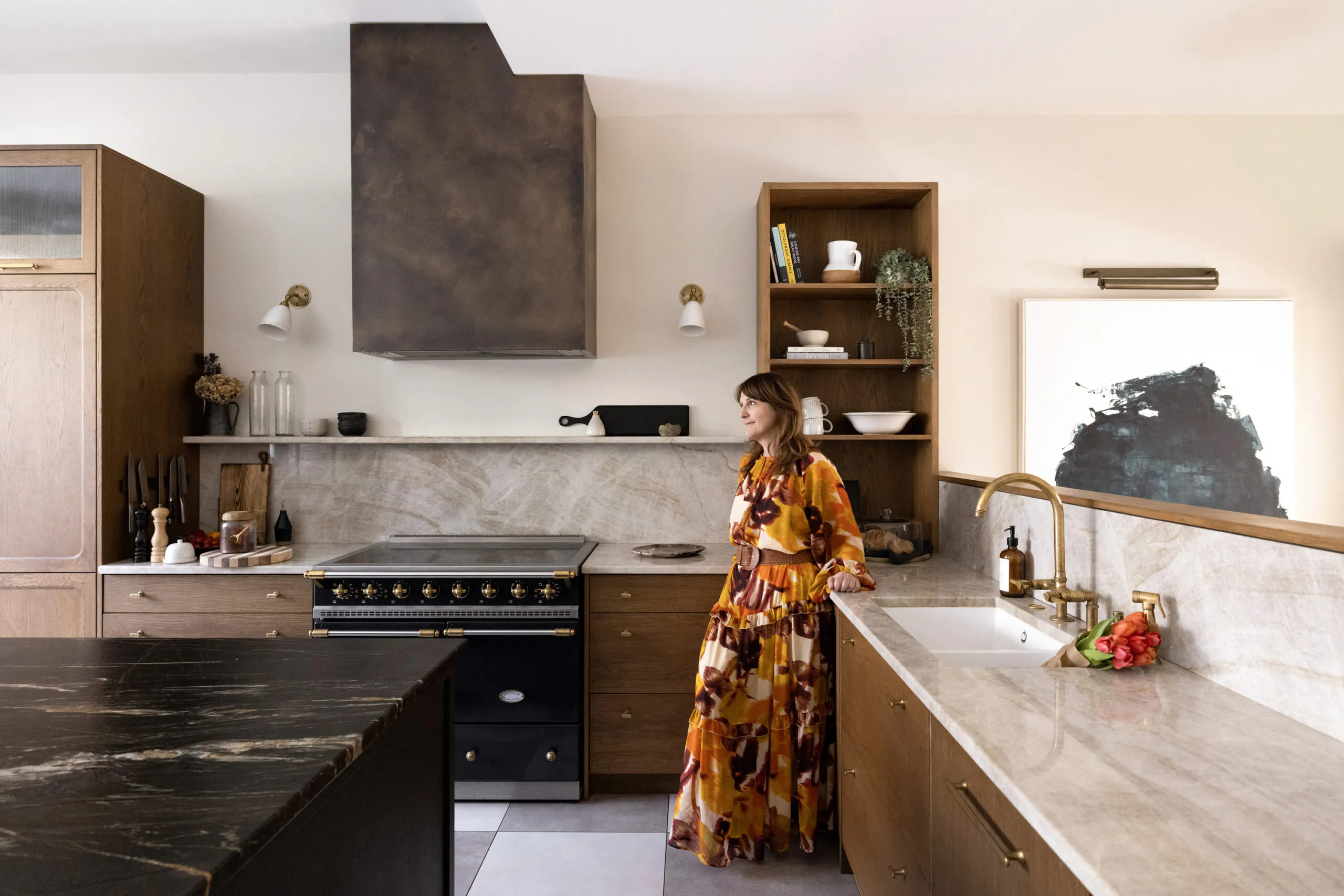
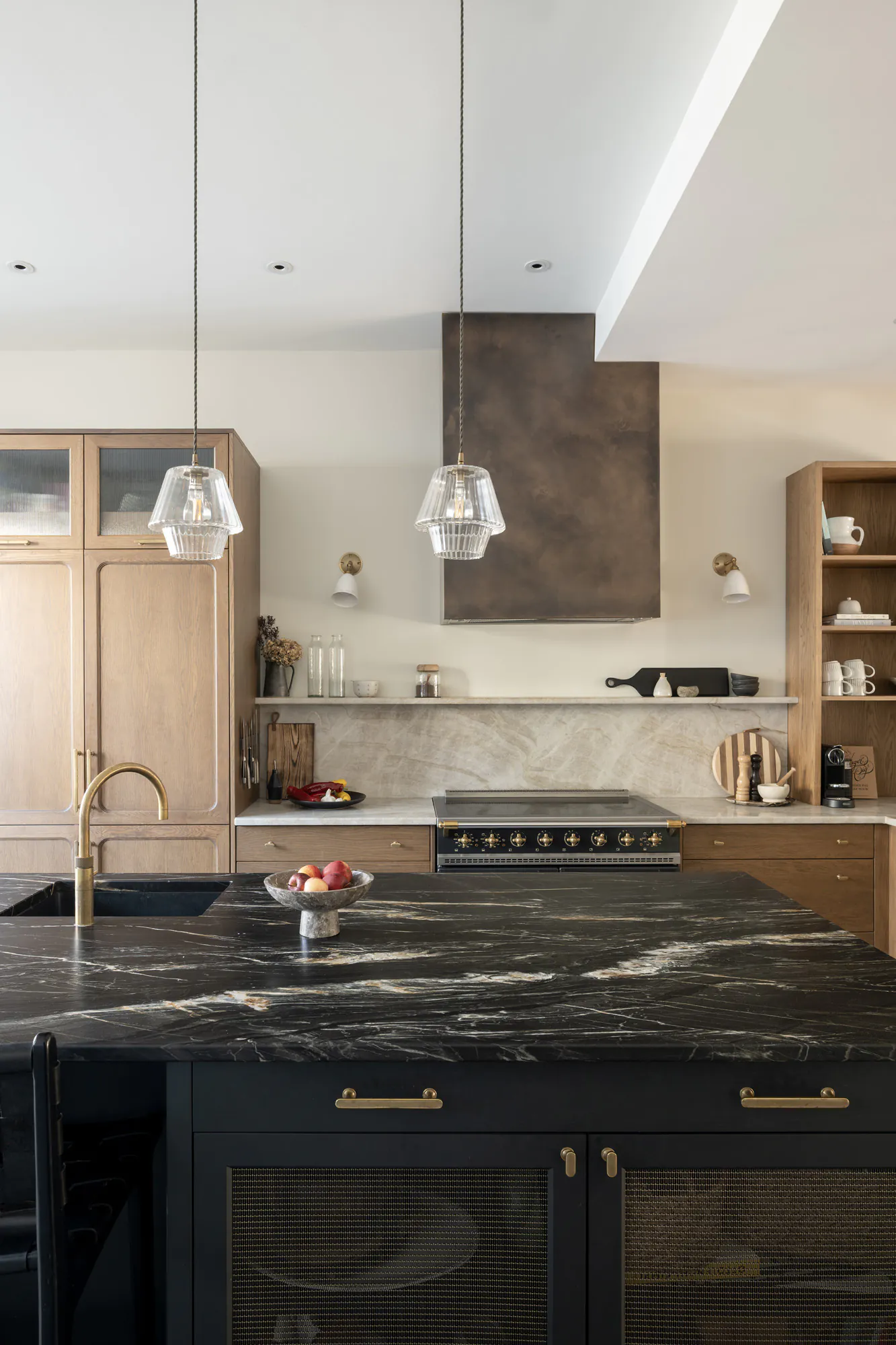
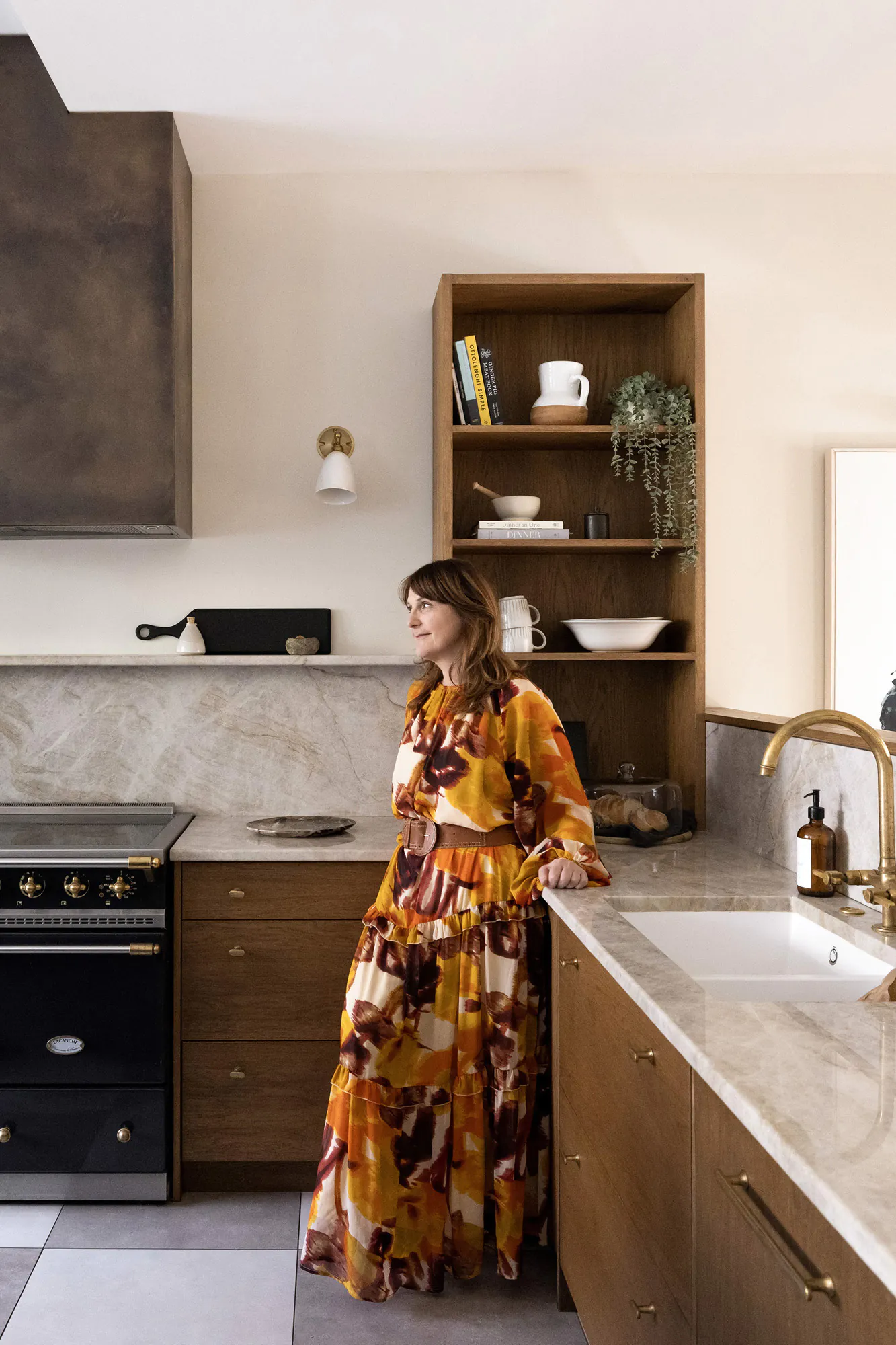
The kitchen it faces operates with similar intent. Built for a family who’d come from a large, sociable way of living – and found themselves in what was a one-person galley – it now has the ease and logic of a professional space. A generous island with bar seating, veined granite worktops, a bespoke antique brass cooker hood designed by the studio. “It’s just such a peaceful, positive space,” says Anna. By day, the setting welcomes multiple coffees and the chaos of busy mornings; by evening, it dims into a low-lit stage for drinks and dinner prep.
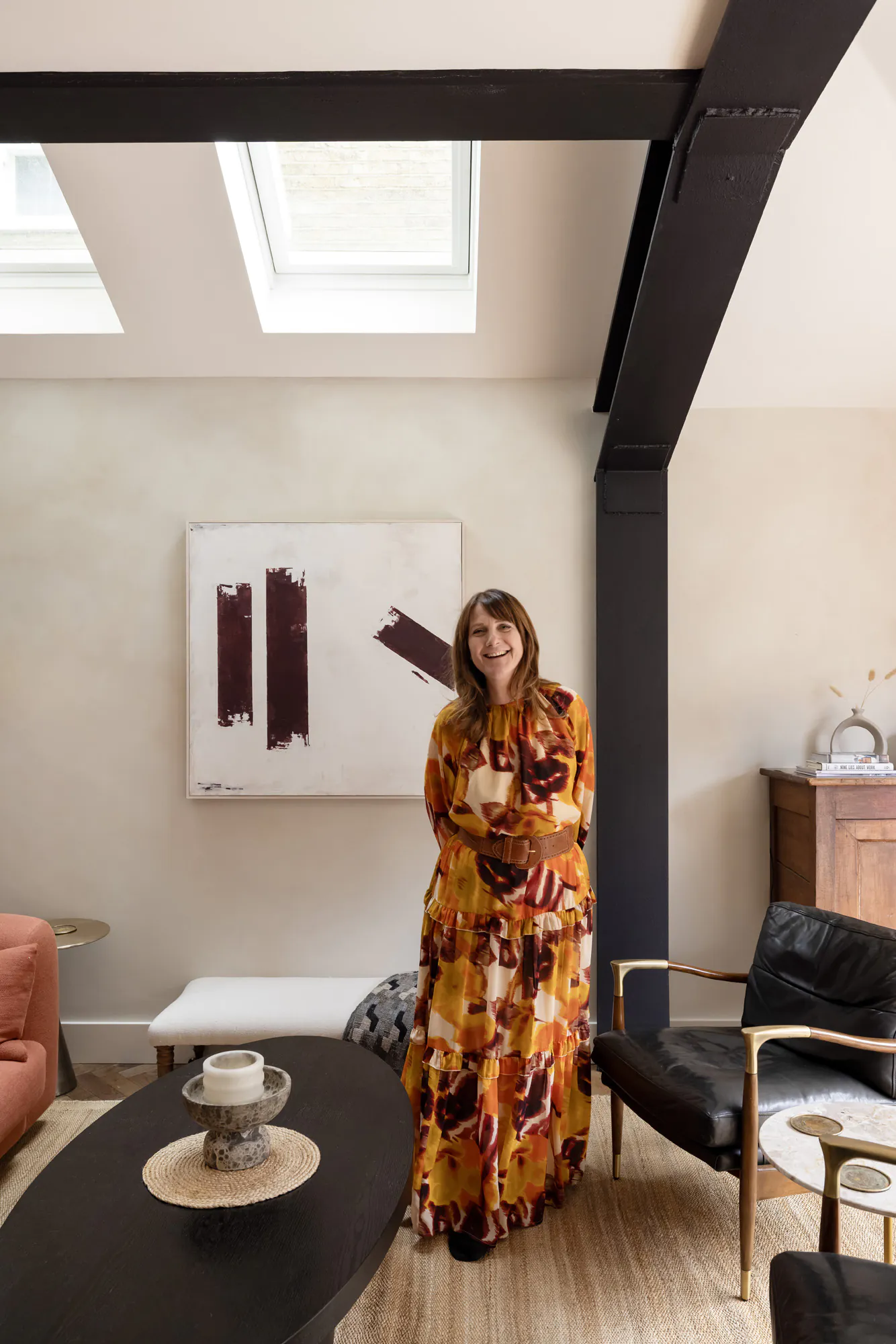
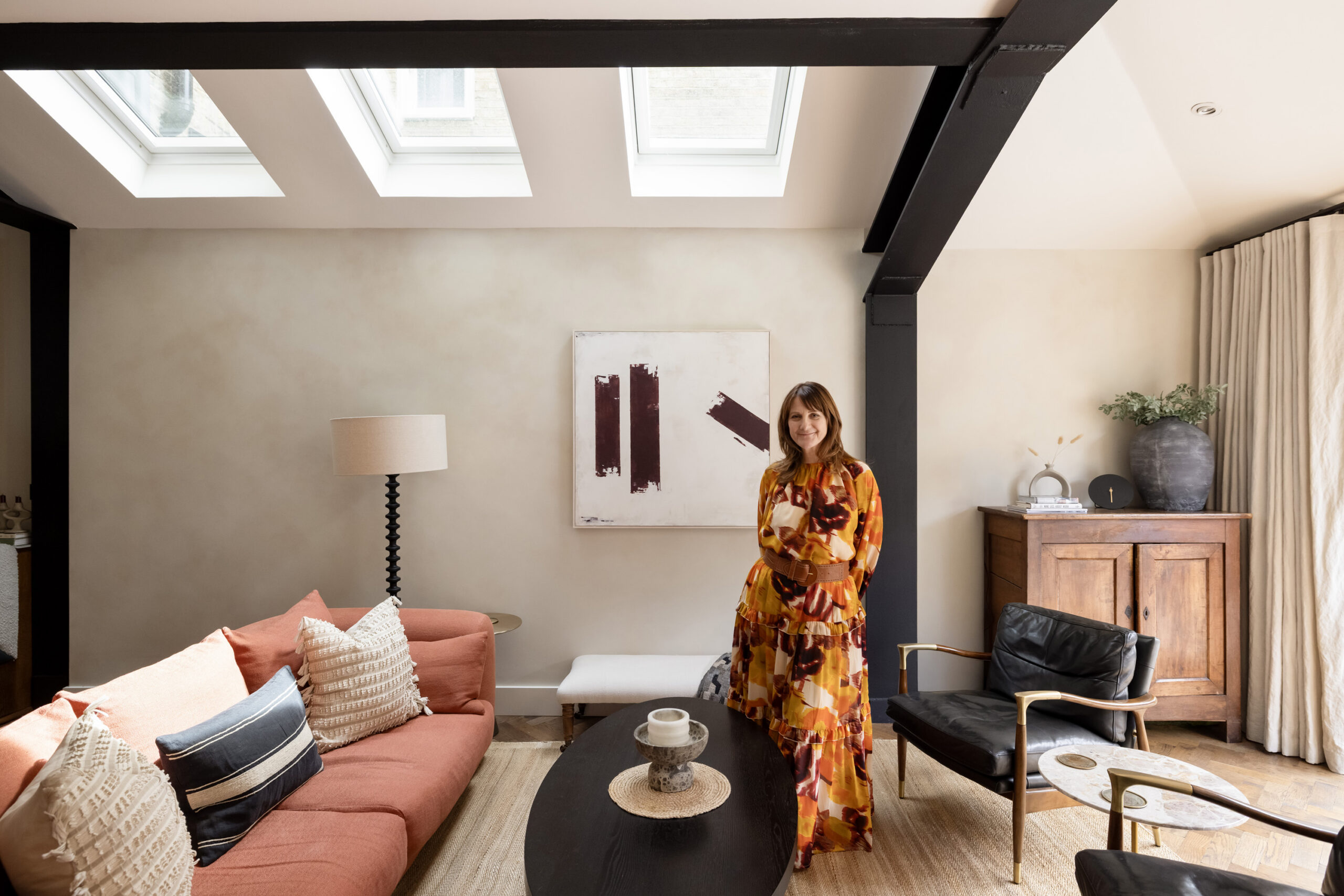
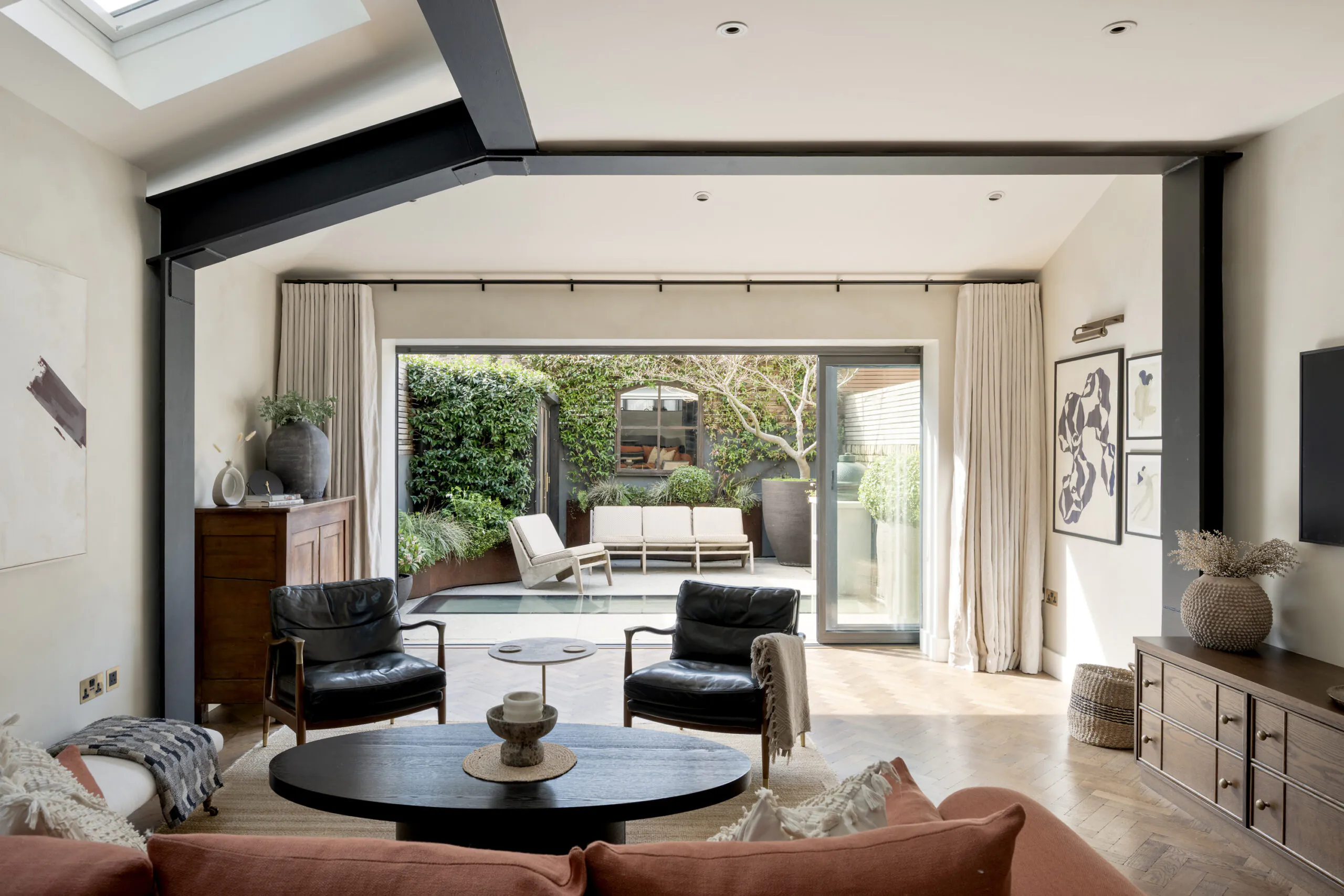
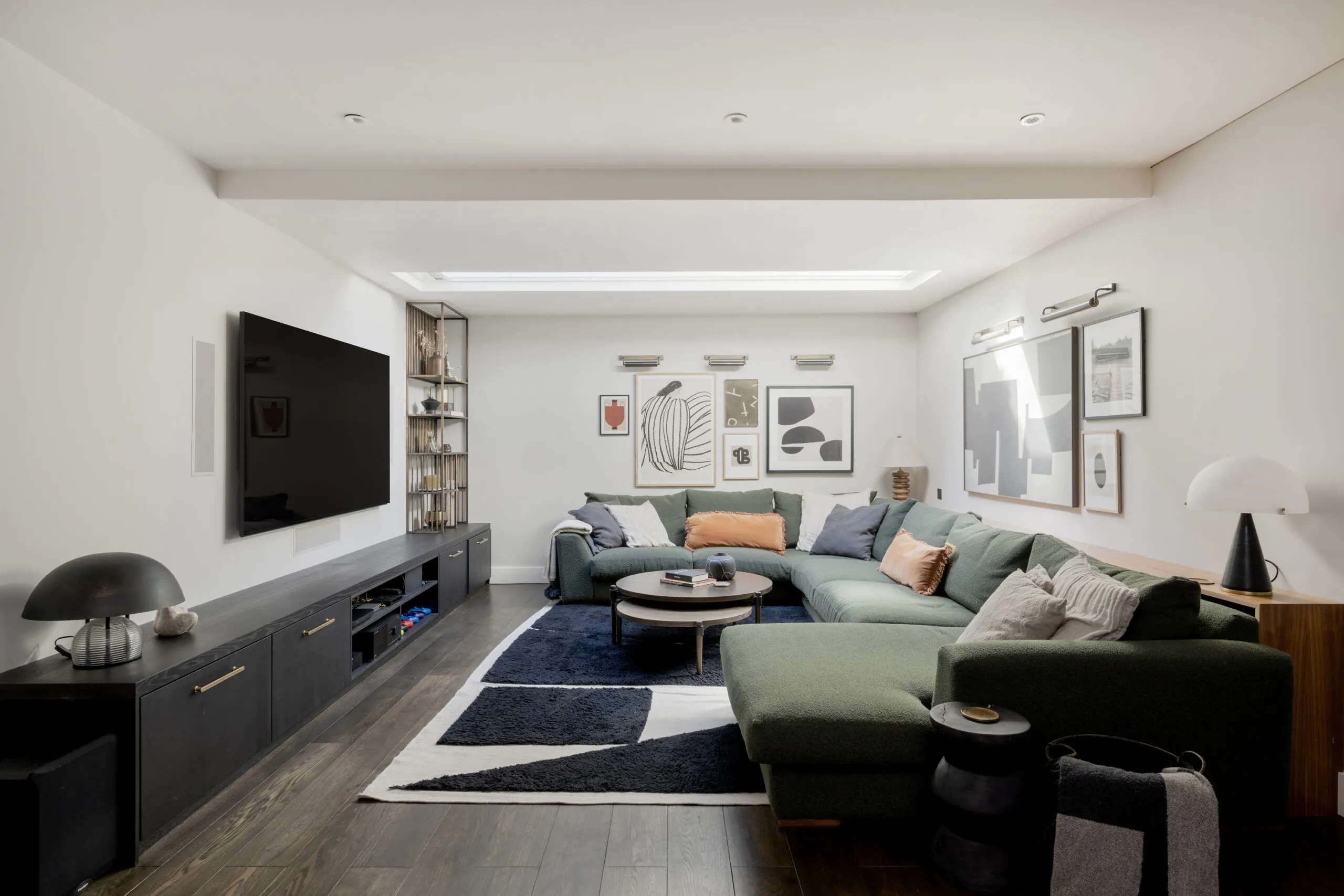
Every good venue knows when to turn the lights down and the music up – and the basement is Broomhouse Road’s version of that moment. A versatile reception room occupies a register that’s deliberately playful: a skylight keeps it bright enough for homework and after-school sprawl, while a bespoke creative nook conceals craft projects in progress. Come evening, the room shifts – home cinema, private bar. It’s the kind of space that serves for dinner party overflow or a family movie night.
“With multiple children growing up in a London townhouse, you run out of space fast if every room only does one thing,” smiles Anna. “Creating spaces that could function for multiple uses was incredibly important.”
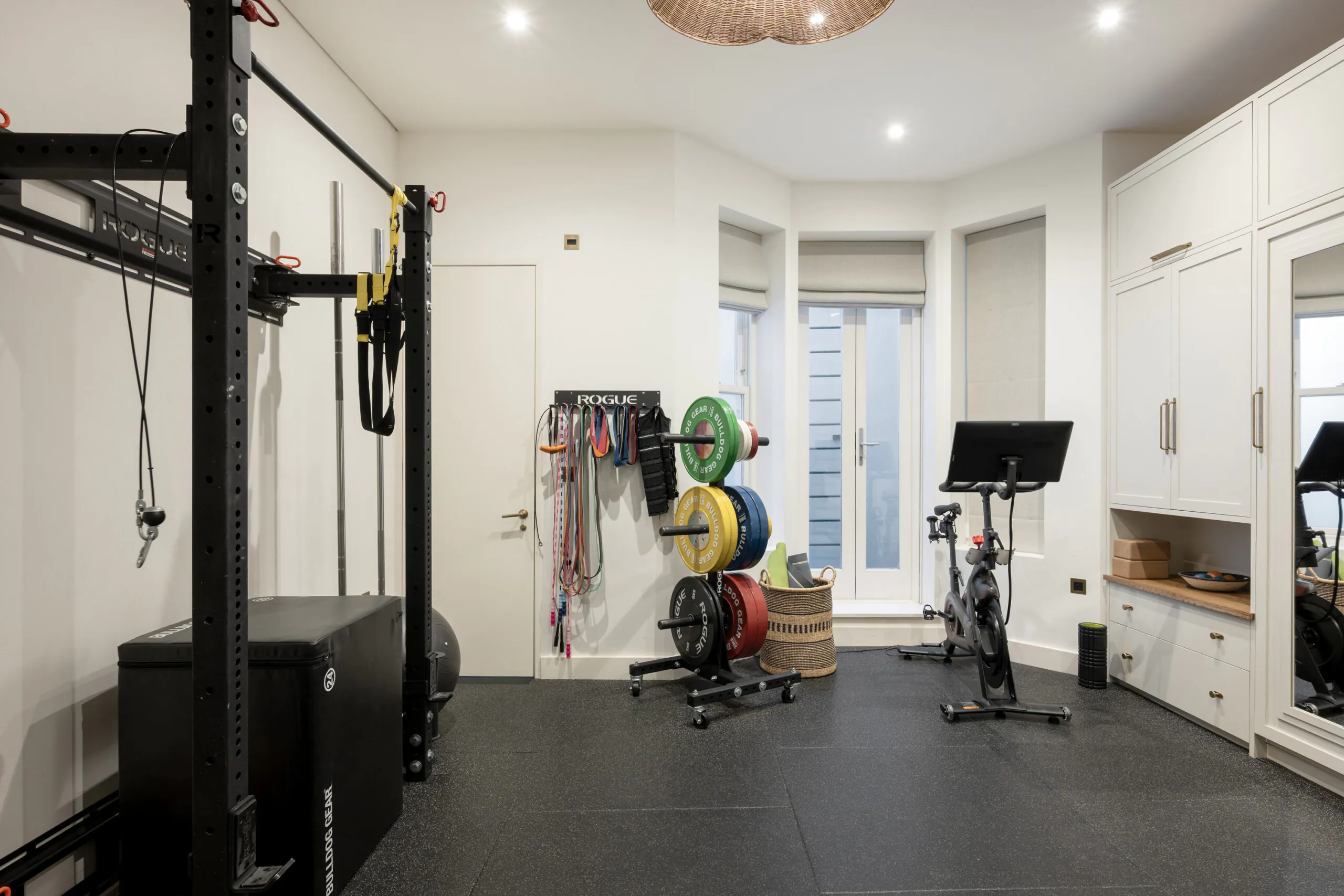
That concept carries across the level into the gym – the “perfect example” of the home’s ability to adapt. Day to day, it’s a well-equipped workout space; when required, a drop-down bed and low-level lighting form an atmospheric guest room.
We need to devise designs that can flex. For the way people eat, drink, rest, work and play – which changes throughout the week.
Anna Burles, interior designer
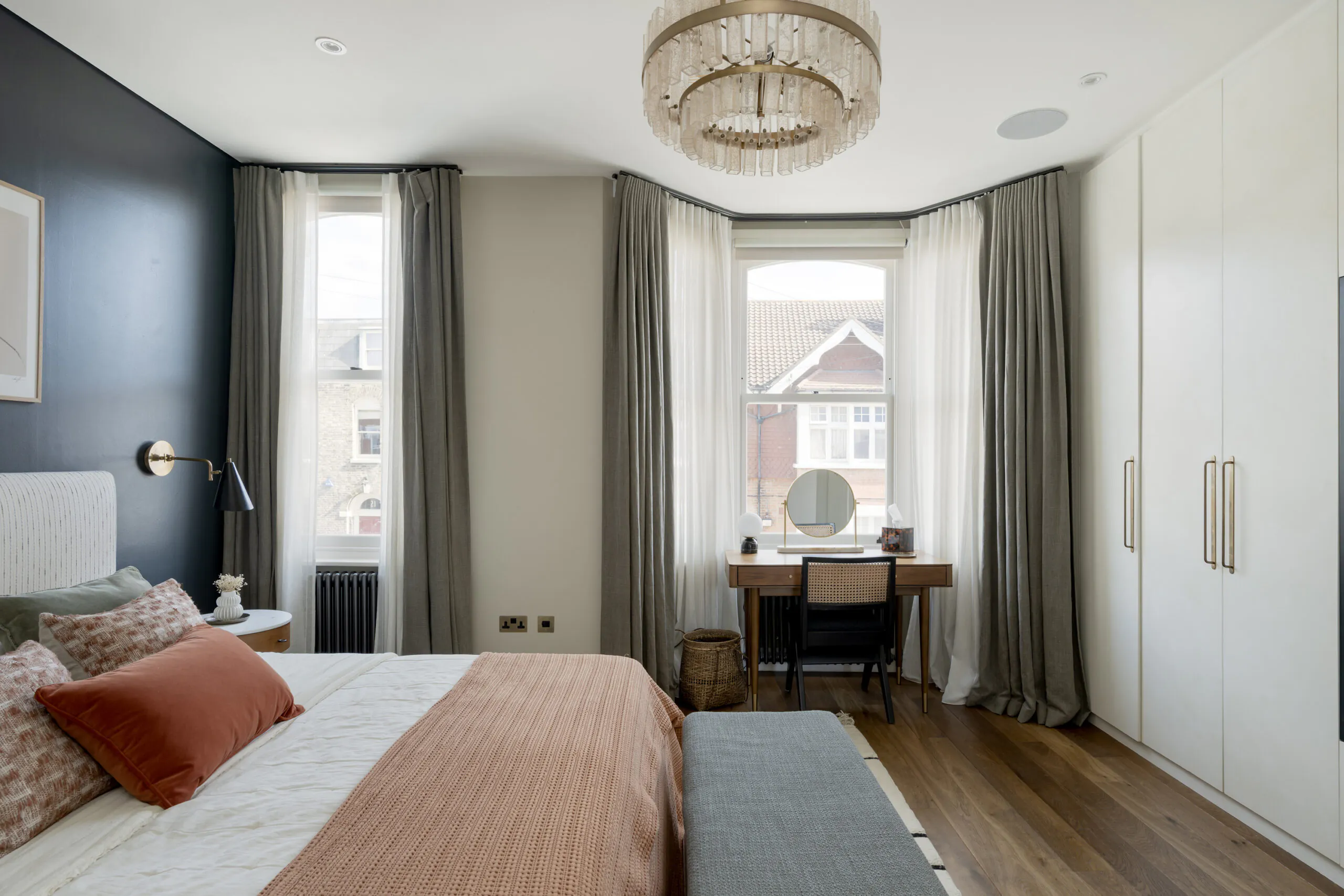
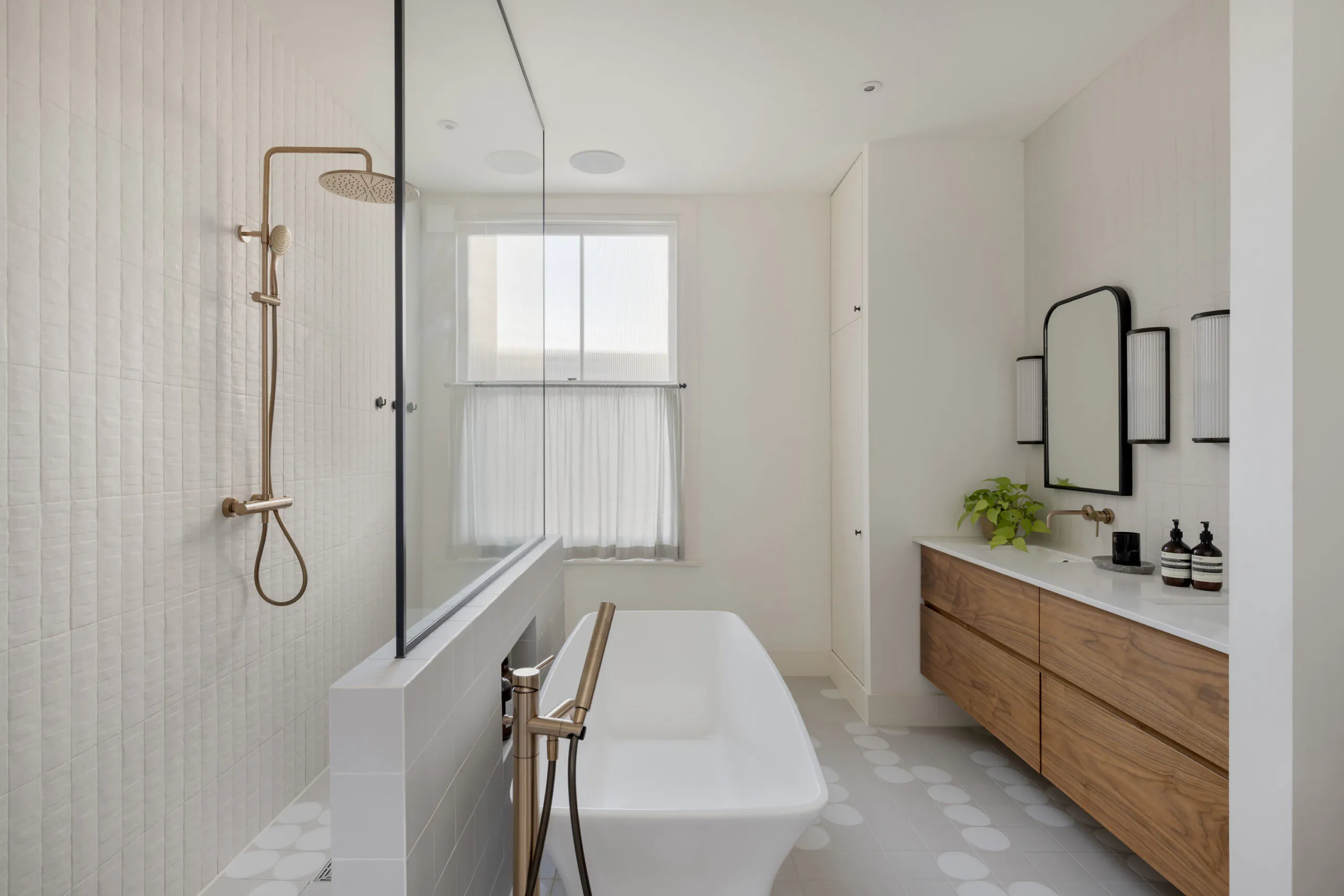
Upstairs, things get quieter. The principal bedroom suite is, Anna notes, a room that photographs well but feels even better in person – “almost ethereal,” she says. In the en suite, soft light filters through sheer curtains, while a sculptural screen between the freestanding bath and walk-through shower lends the room a depth that images don’t quite capture. In describing it, she lands on “a truly boutique hotel quality”.
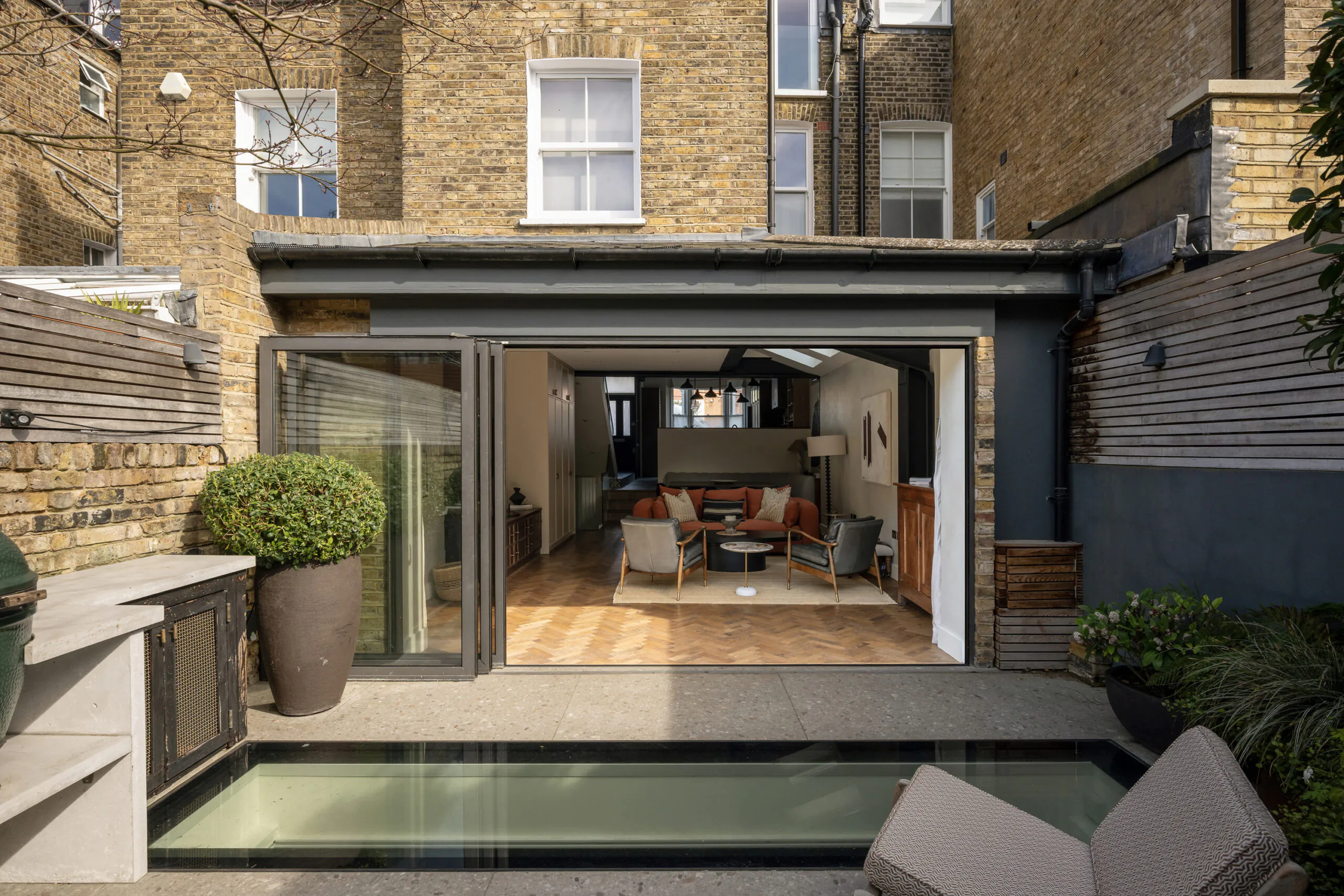
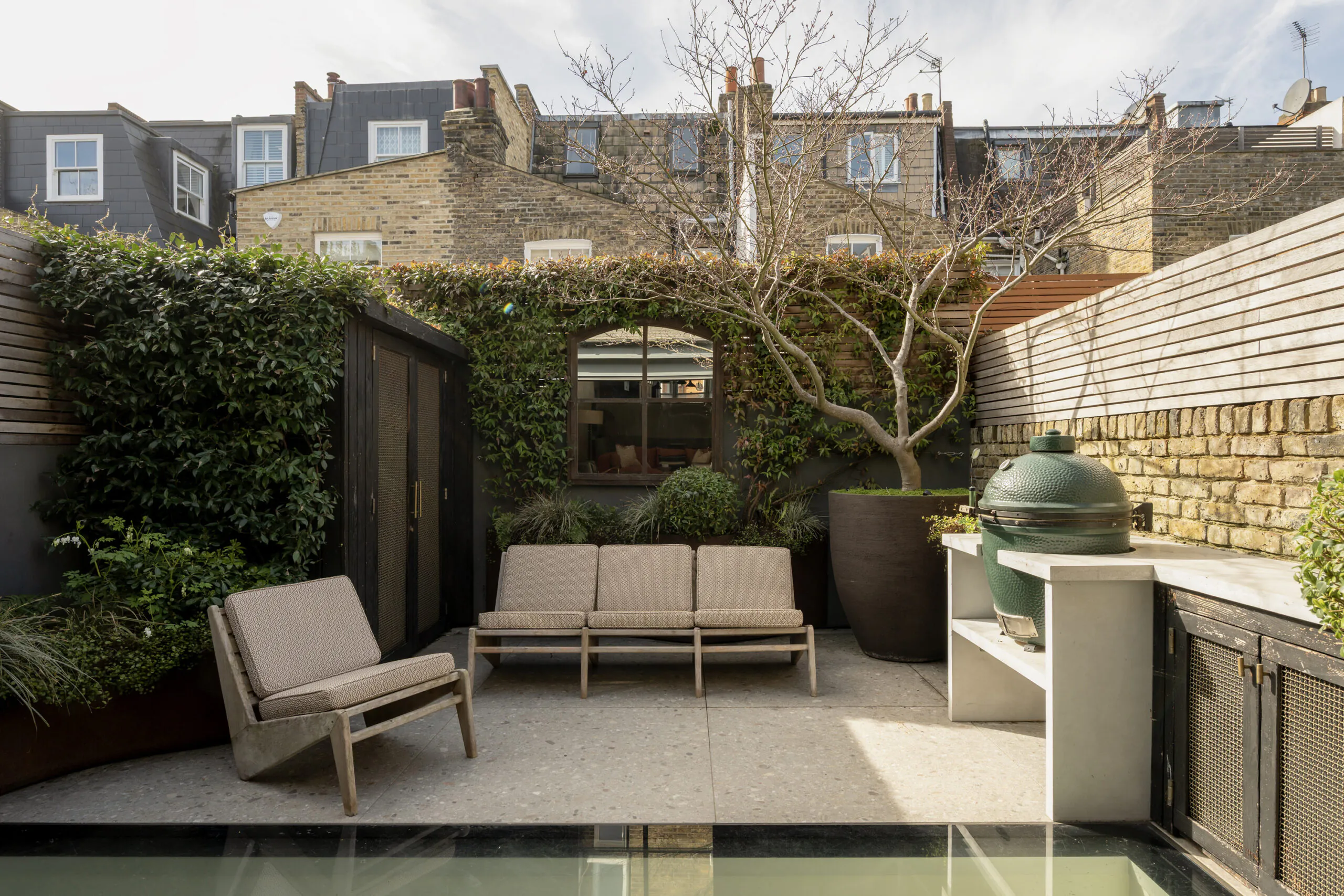
Outside, a private landscaped patio with lounge seating and a Big Green Egg barbecue completes the picture. Beyond the garden wall, Broomhouse Road sits within easy reach of the river, the Hurlingham Club, and a neighbourhood that runs at its own relaxed pace: pastries at Chanteroy, brunch at Hally’s, dinner and drinks at Brook House.
“It would just be so easy to settle in here,” enthuses Anna. For a designer who has spent her career perfecting the art of making people feel at home, imagining herself doing just that might be the highest praise of all.