Escaping the noise: Turning down the volume at Cornwall Gardens
Architecture Interior Design
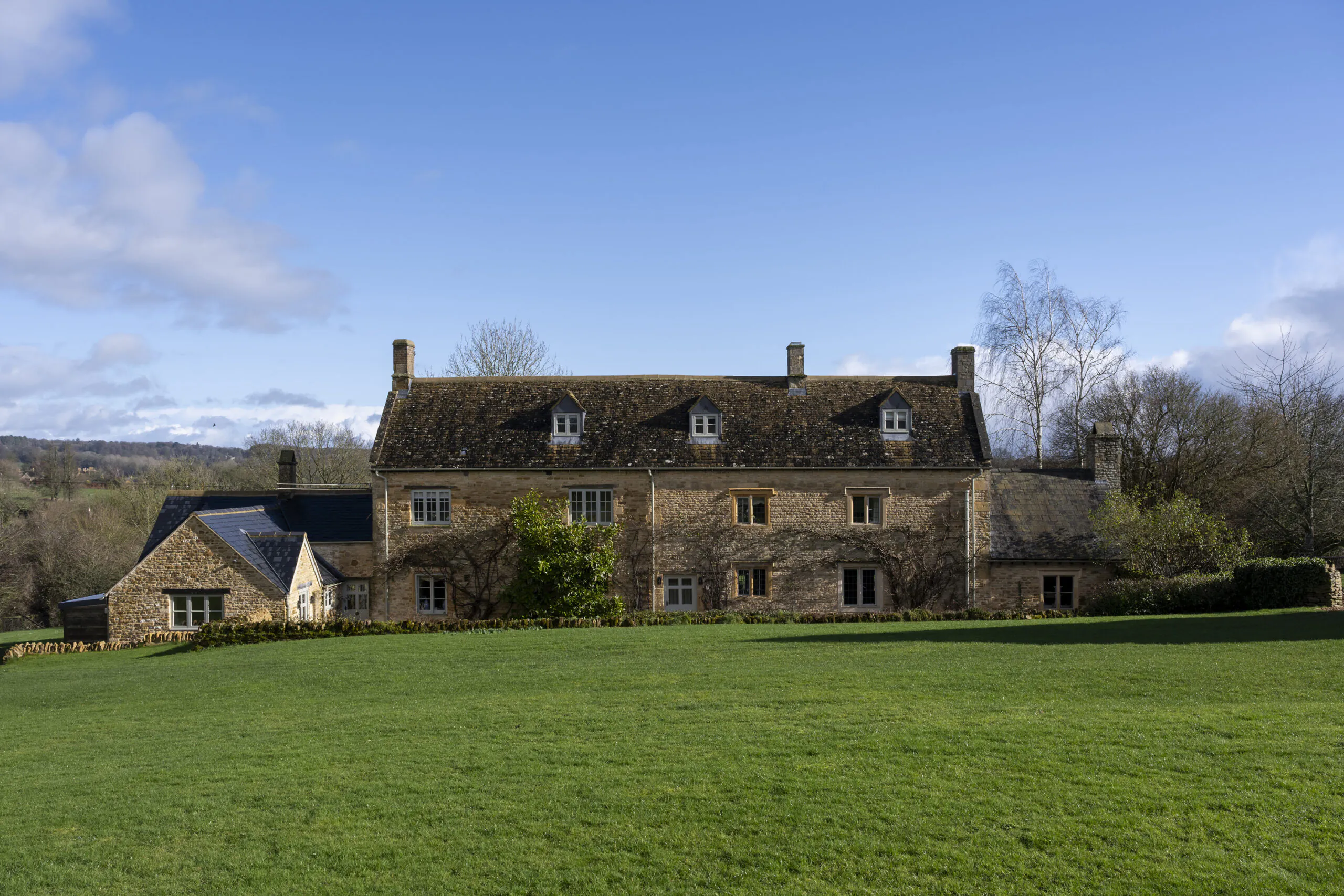
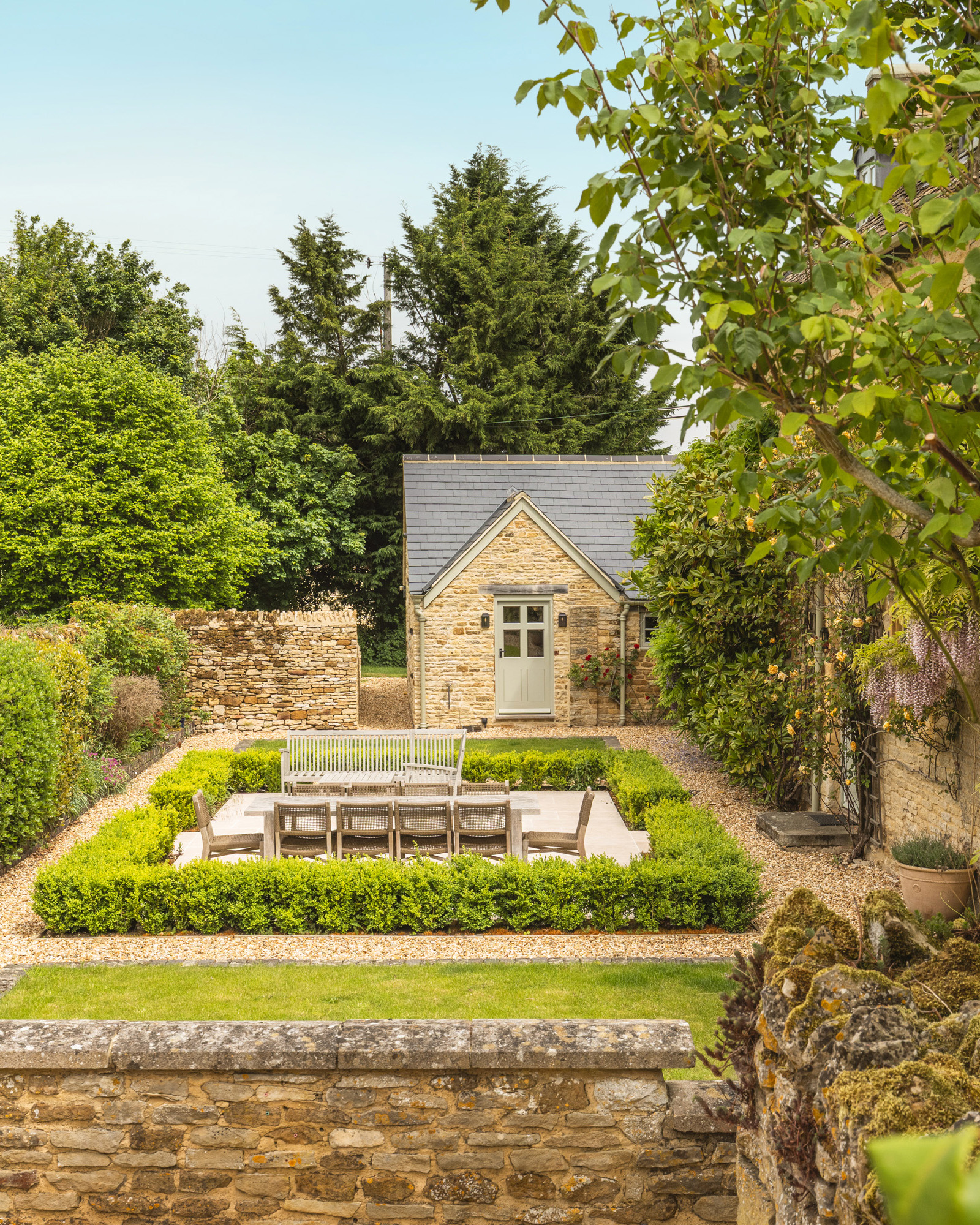
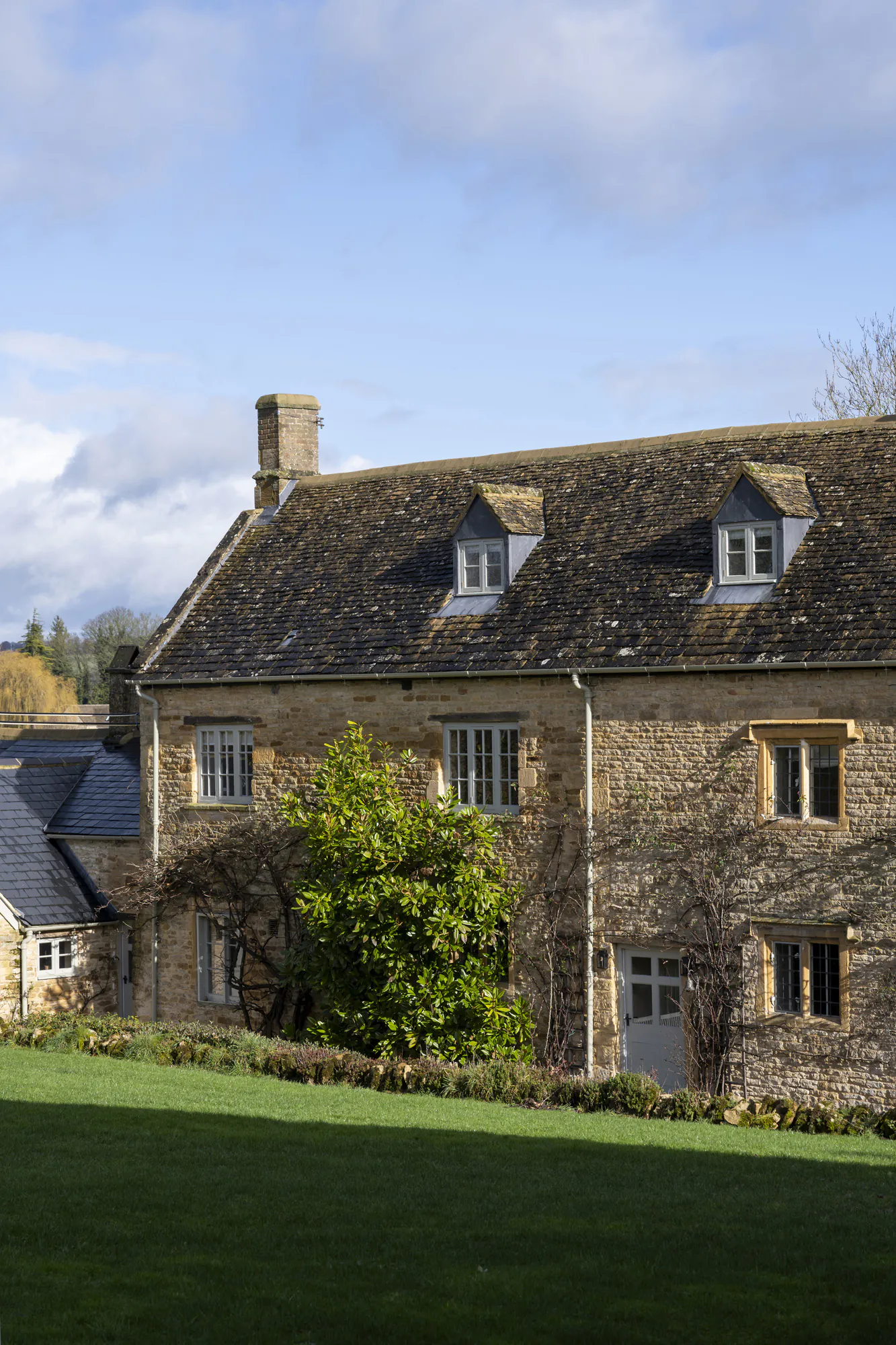
In the rolling hills of the northern Cotswolds, Stow Farm unfolds as a collection of buildings – four dwellings set among orchards and open pasture. Each has its own character, yet all are designed with a shared purpose: bringing people together. An 18th-century listed farmhouse anchors the estate, while a cottage, stone barn and Dutch barn complete the setting.
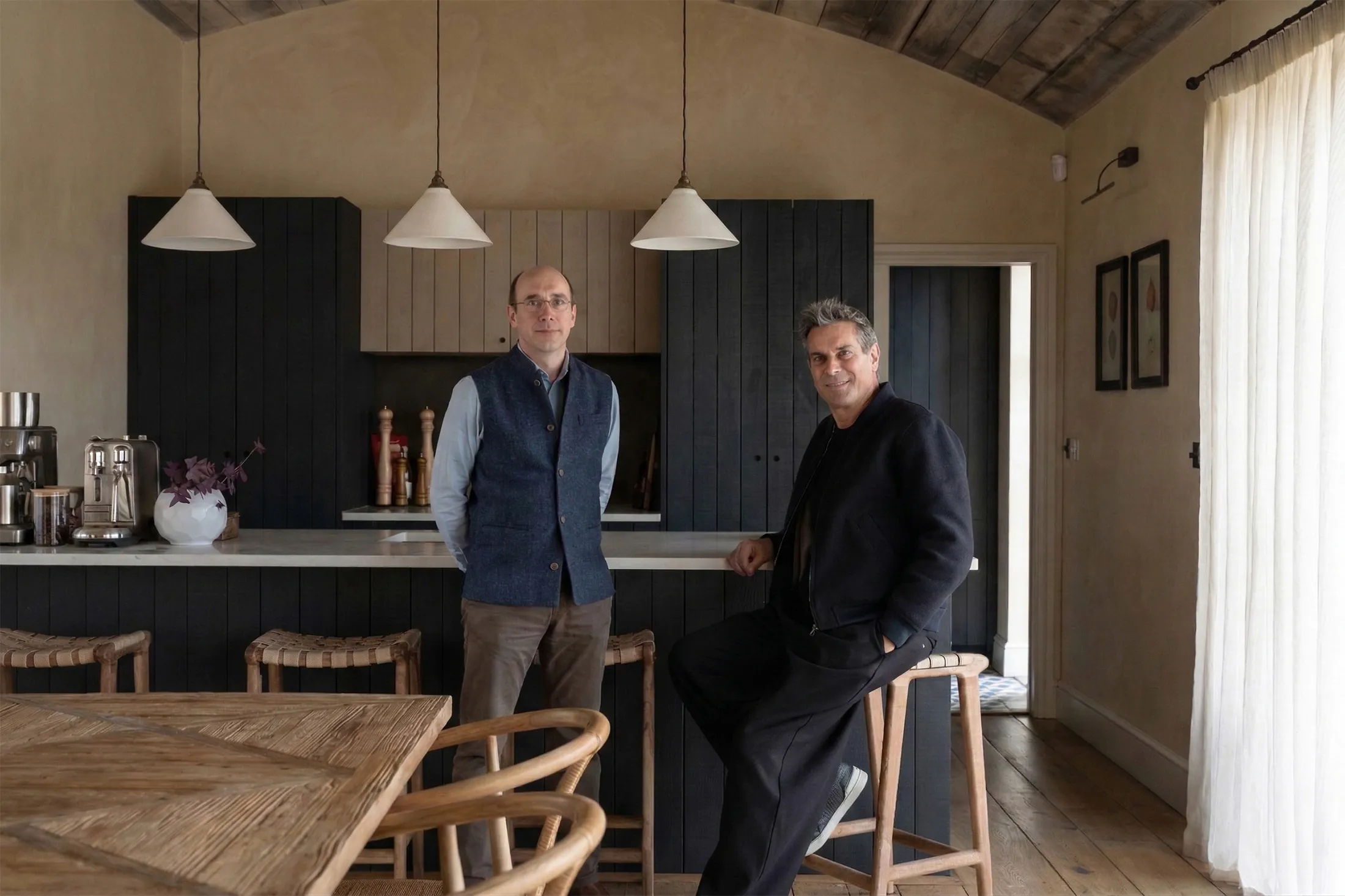
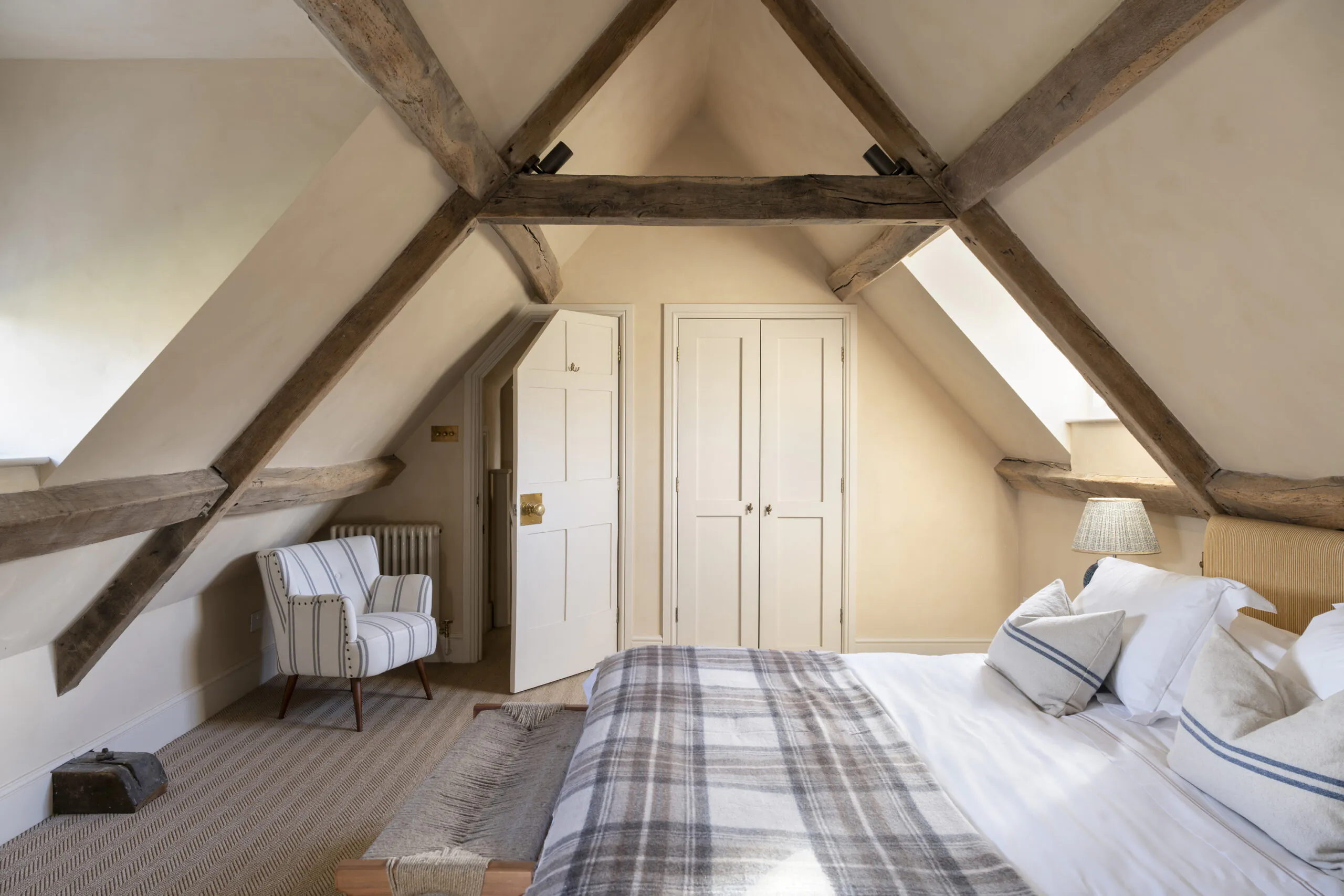
At its heart, Stow Farm is a collaboration between Cotswolds-based Blake Architects and Emma Kirby Design, united by a shared respect for history, landscape and craftsmanship. What began as a traditional countryside restoration evolved into something more layered: a thoughtful balance between the farm’s original rural fabric and contemporary additions that quietly complement it.
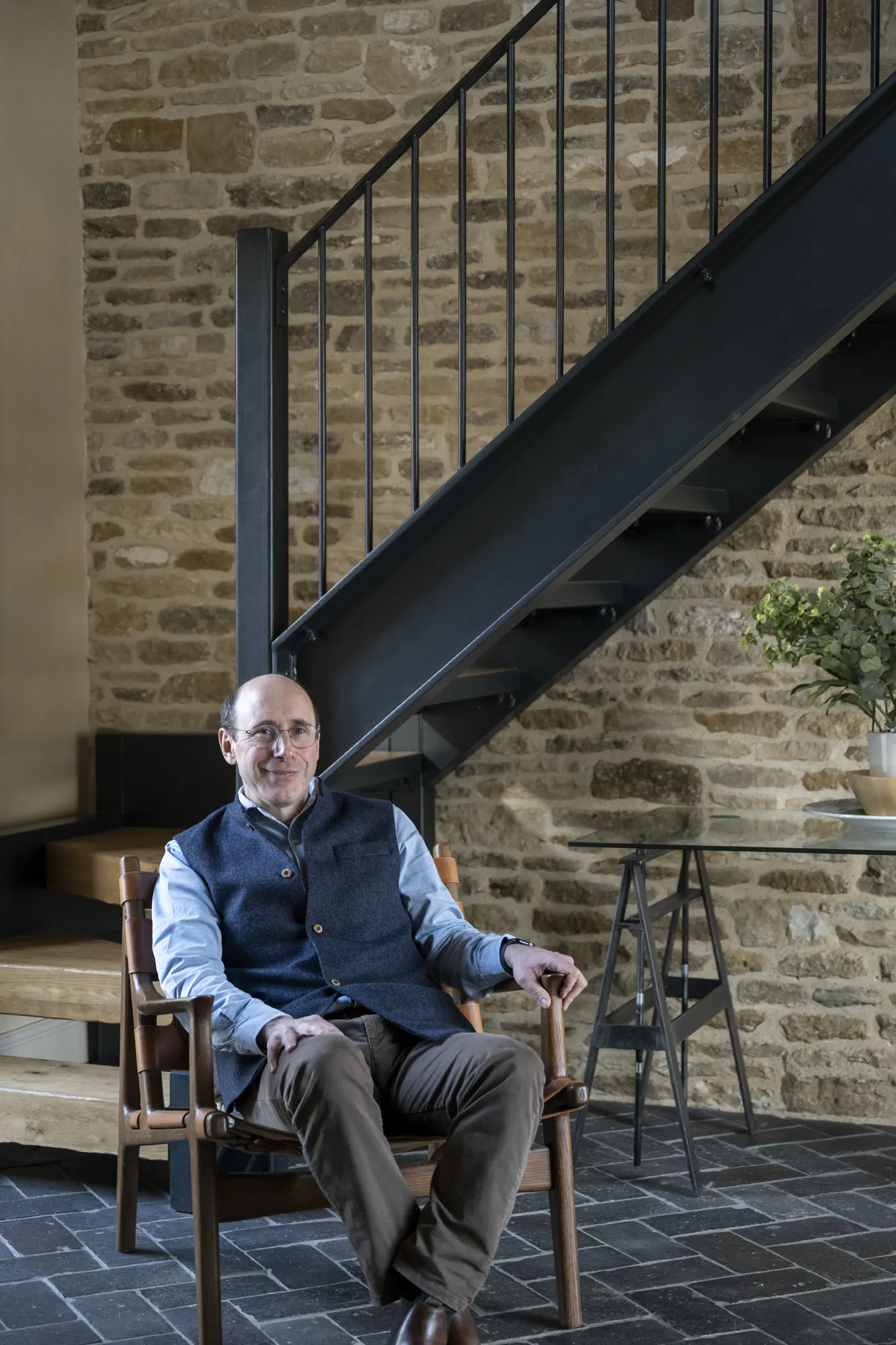
Jonathan Nettleton of Blake Architects explains that the direction shifted early on. Initially conceived as a classic renovation for one generation of the family, the brief gradually passed to the next. With that shift came a broader, more playful ambition. “It became more about how everyone could be together. Summer or winter – we needed spaces that worked for both.”
That focus on how the house would actually be lived in – on “a really cold, damp night” as much as a golden July afternoon – helped shape the architecture. Raised in the Cotswolds, Jonathan says he understands its houses and rhythms “almost by osmosis.” His interventions avoid both pastiche and jarringly modern gestures, instead aiming for quiet balance. “I think there’s a clear harmony between the new and the old,” he says.
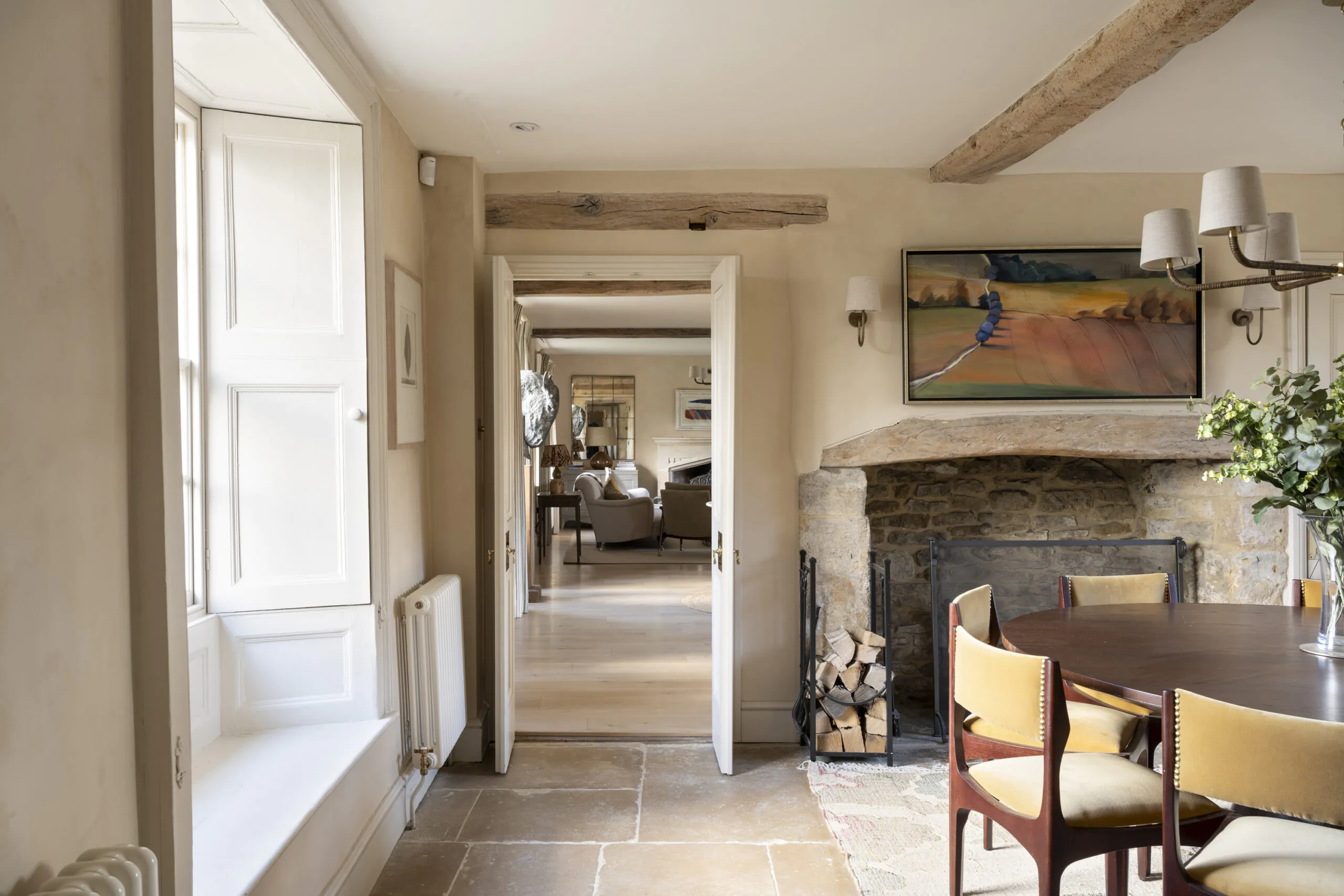
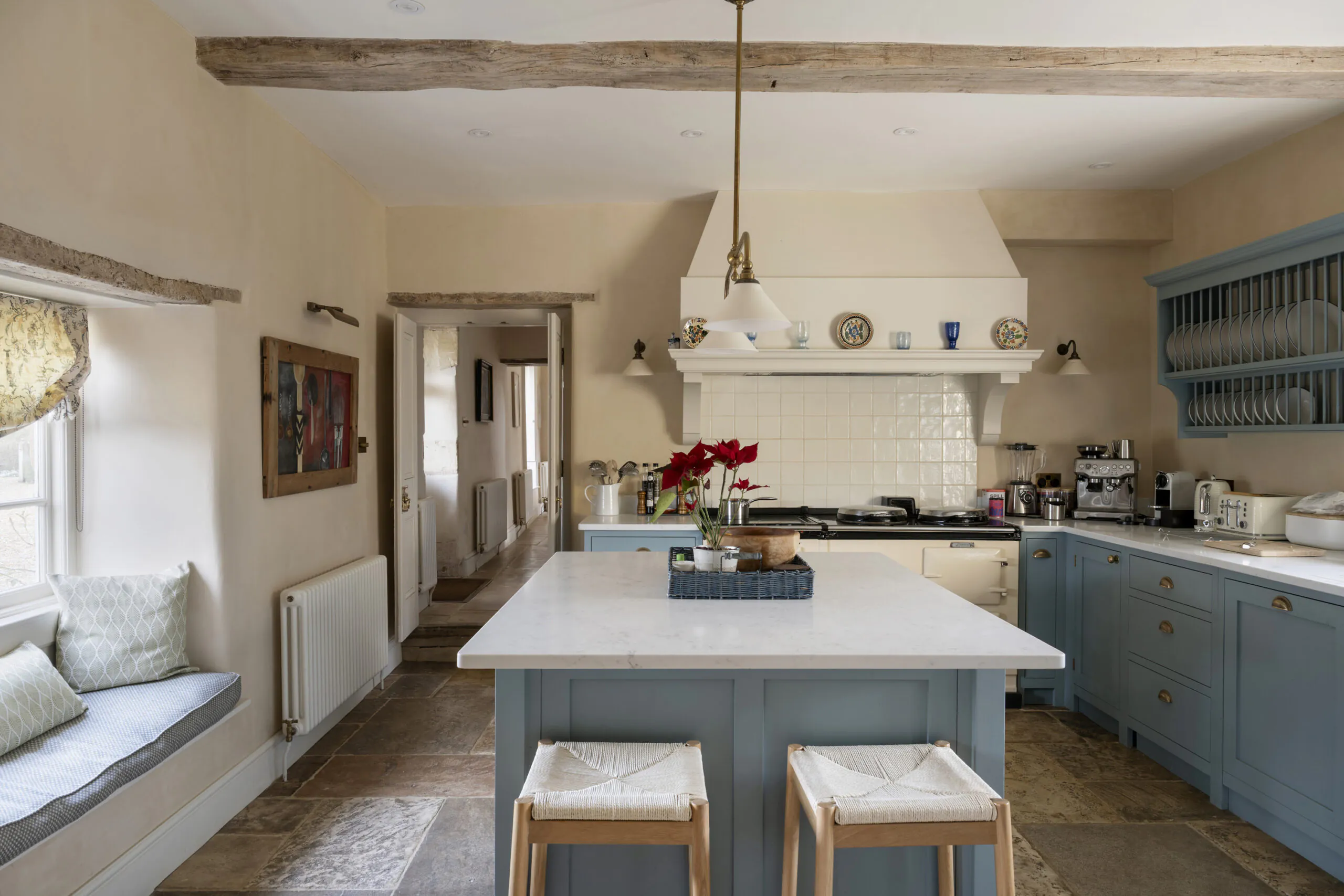
There is also, as he puts it, “a distinct lack of pretentiousness”. From the sky-blue kitchen cabinetry and double butler sink in the farmhouse to the dark green units and terracotta floors in the cottage, the bespoke elements feel lived-in rather than overly styled.

Summer or winter — we needed spaces that worked for both.
Jonathan Nettleton
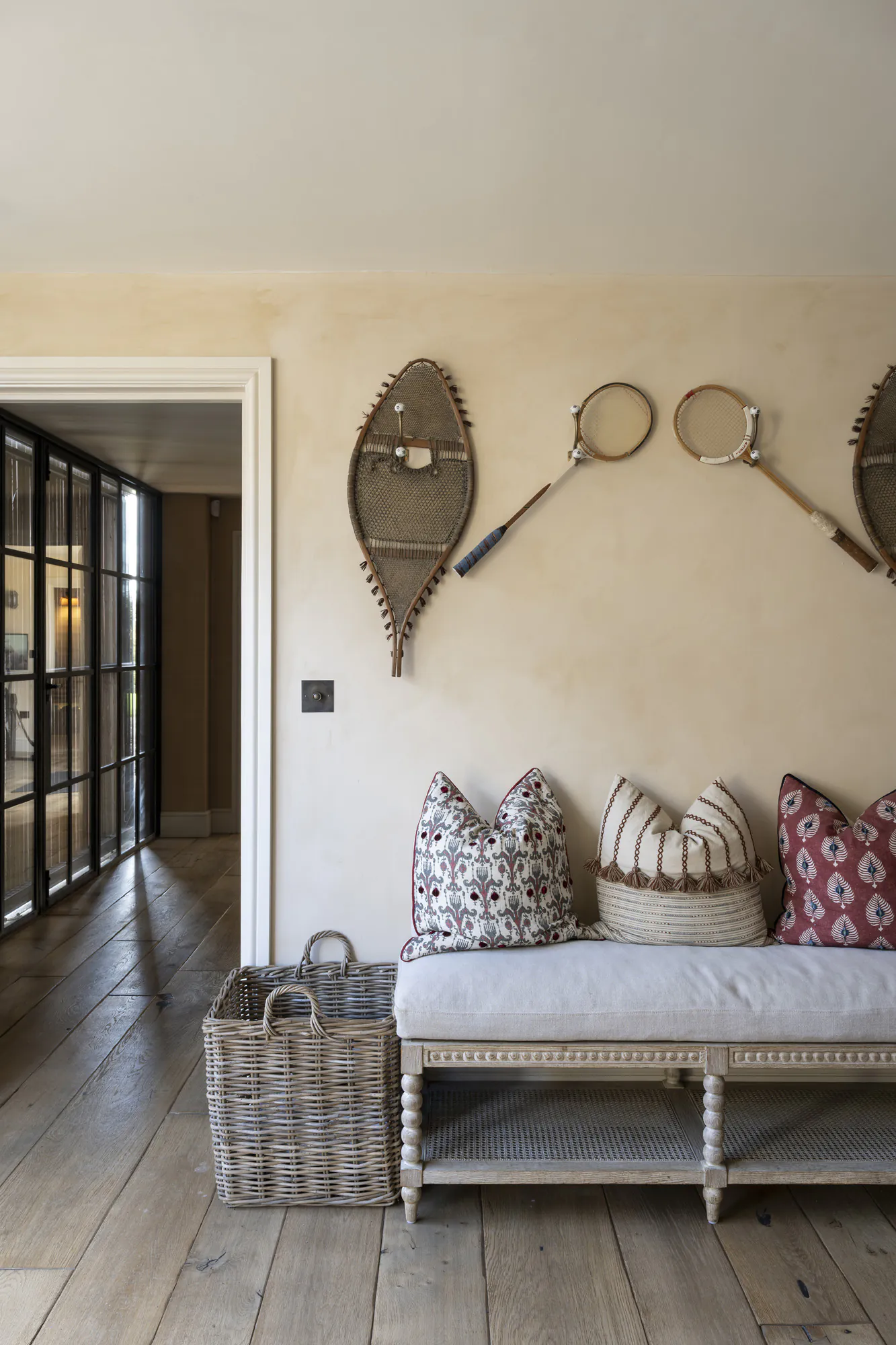
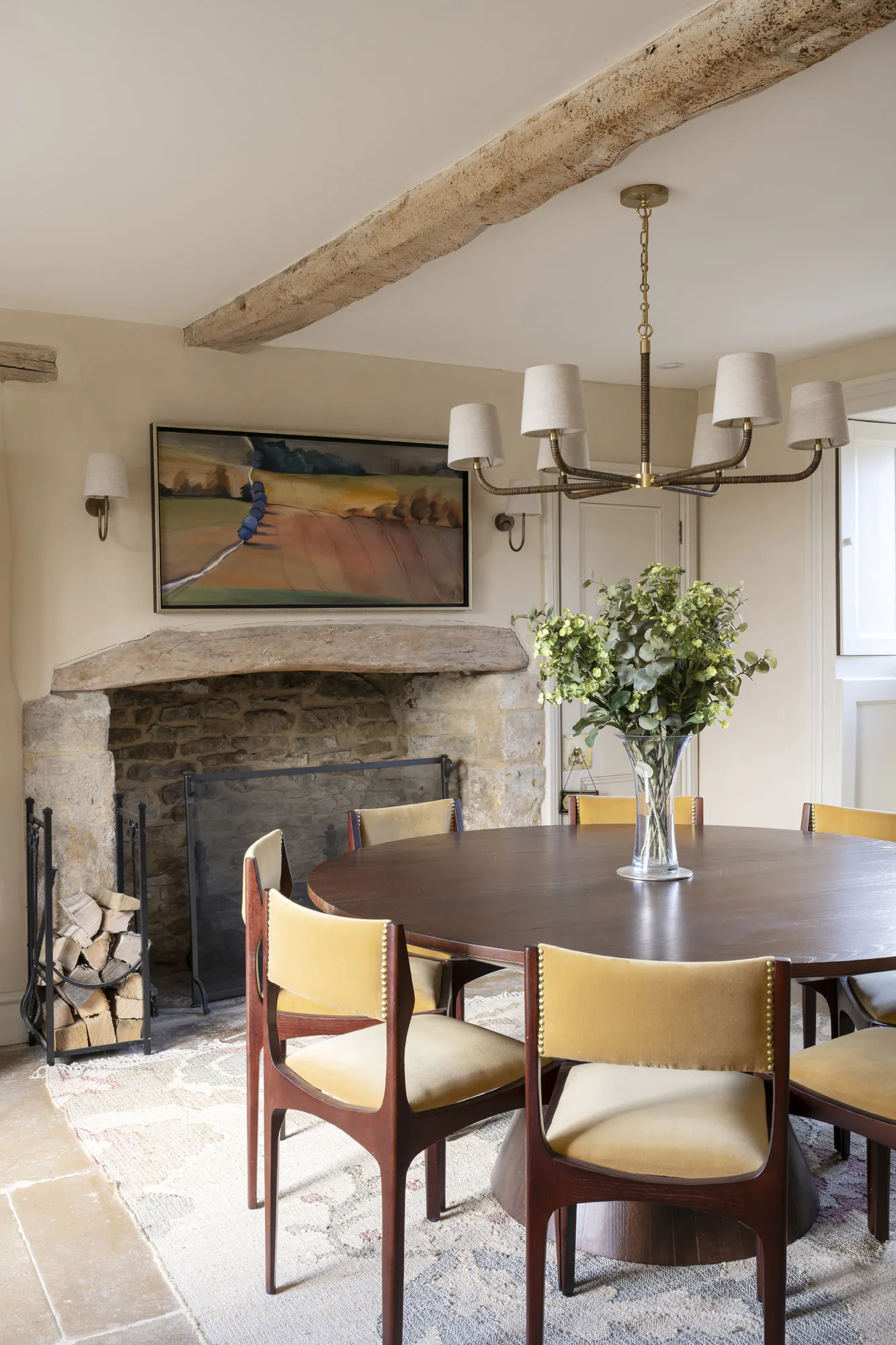
It’s here that Emma Kirby Design’s material sensibility becomes clear. “We like to use what we consider to be classic and timeless elements,” says the studio’s development director, Michael Ergatoudis. “Principally natural materials, often with a strong connection to the location.”
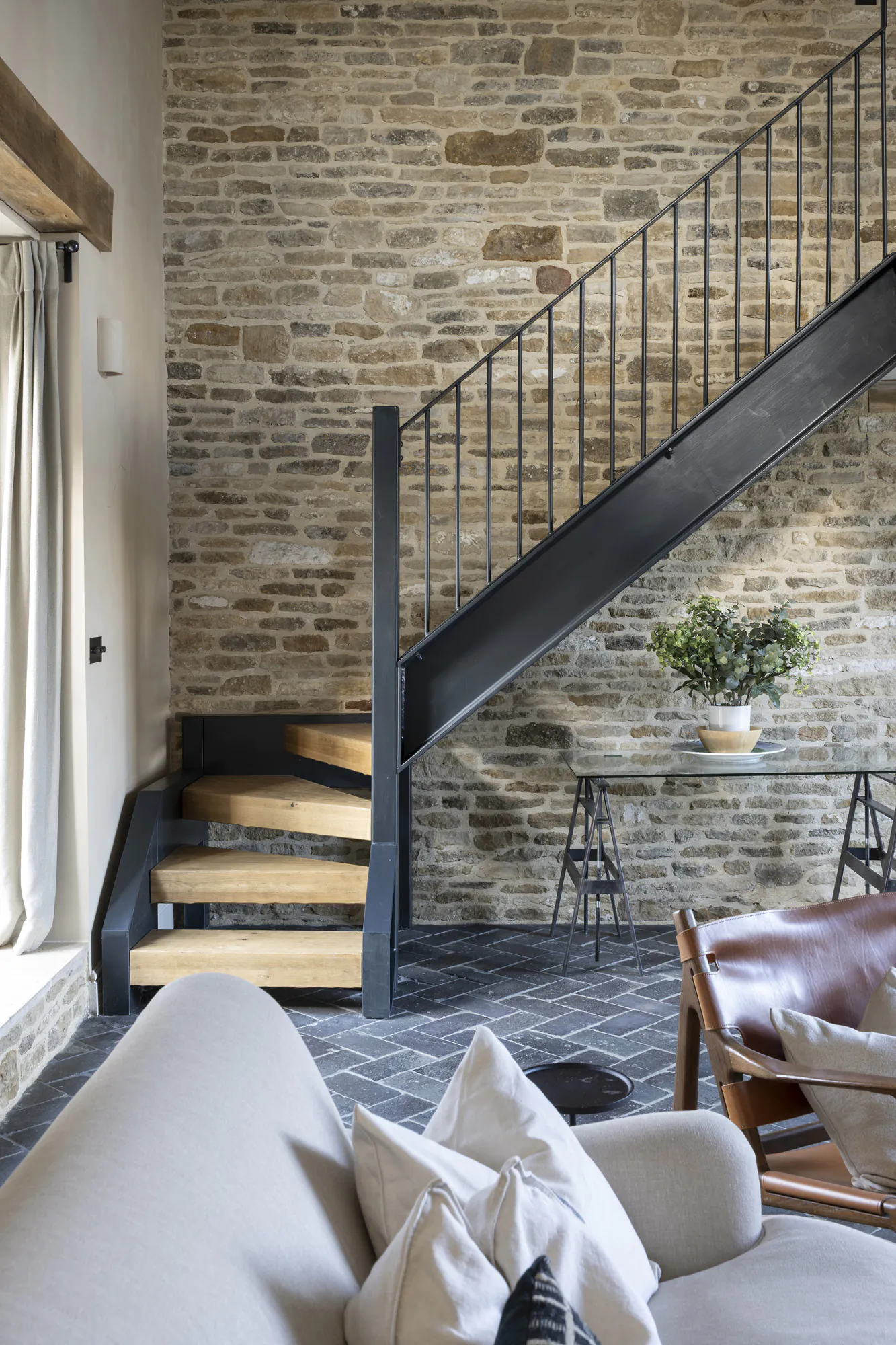
Timber, local stone, brick and steel-framed glazing form the backbone of the interiors – not as aesthetic statements but as responses to place. “In agricultural conversions, steel windows feel inevitable,” he adds. “Simple, functional and utilitarian.”
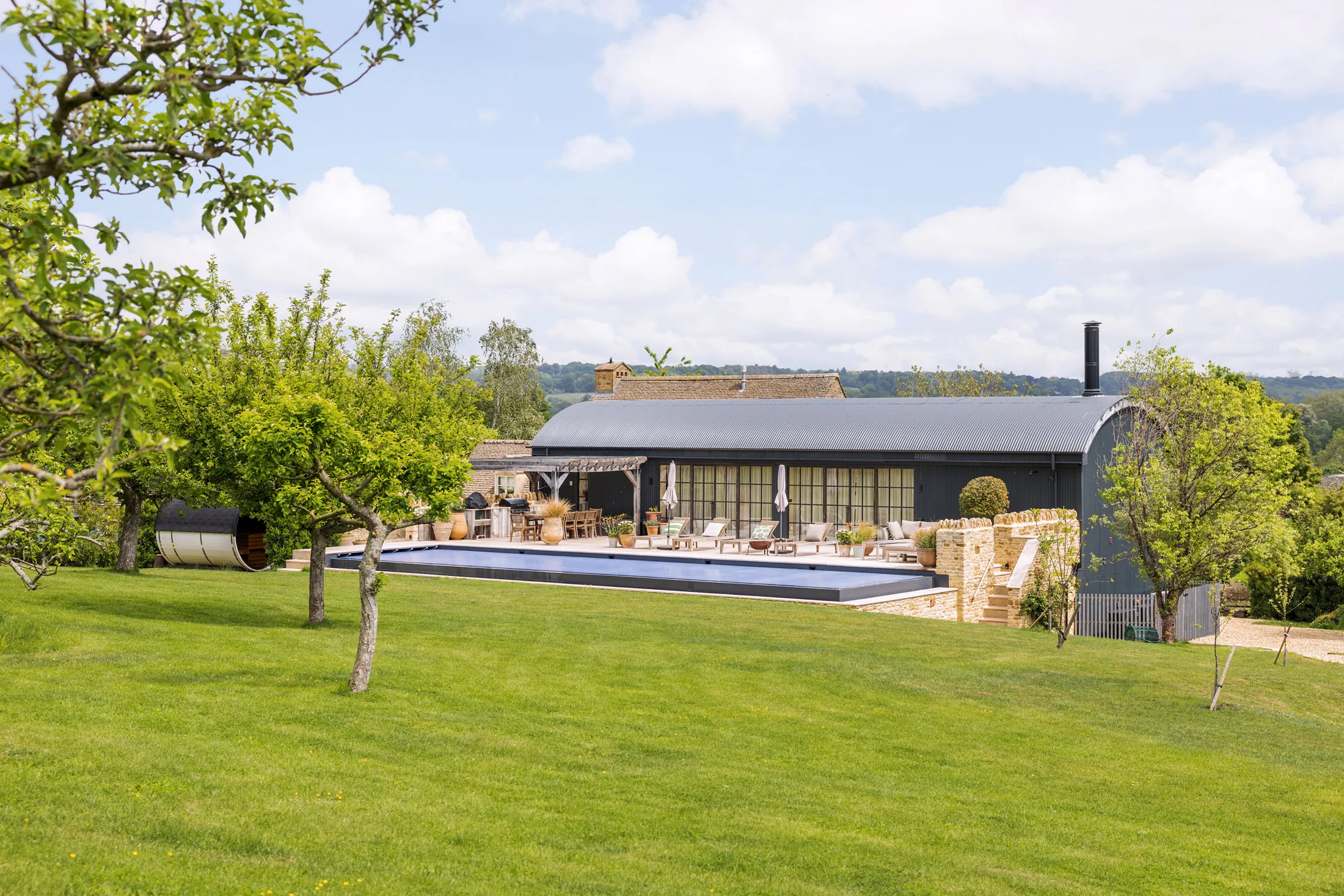
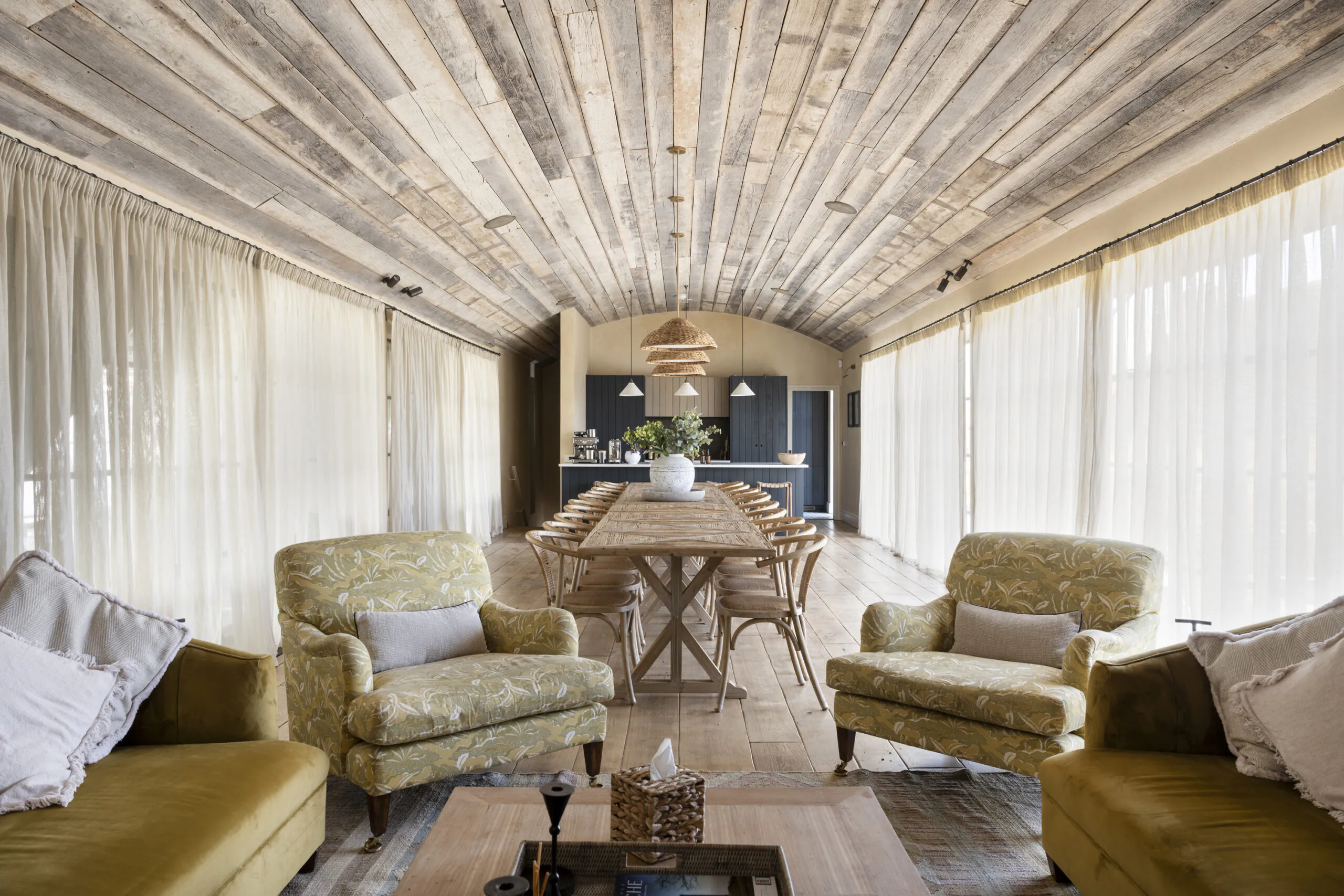
The original farmhouse, while charming, was too modest in scale to host large family gatherings comfortably. The solution lay in reimagining the Dutch barn. Once a working agricultural structure – and at one stage even considered for classic car storage – it has become the estate’s social hub: a generous, open-plan space where up to 20 people can gather around a single table, spilling onto a terrace overlooking the countryside.
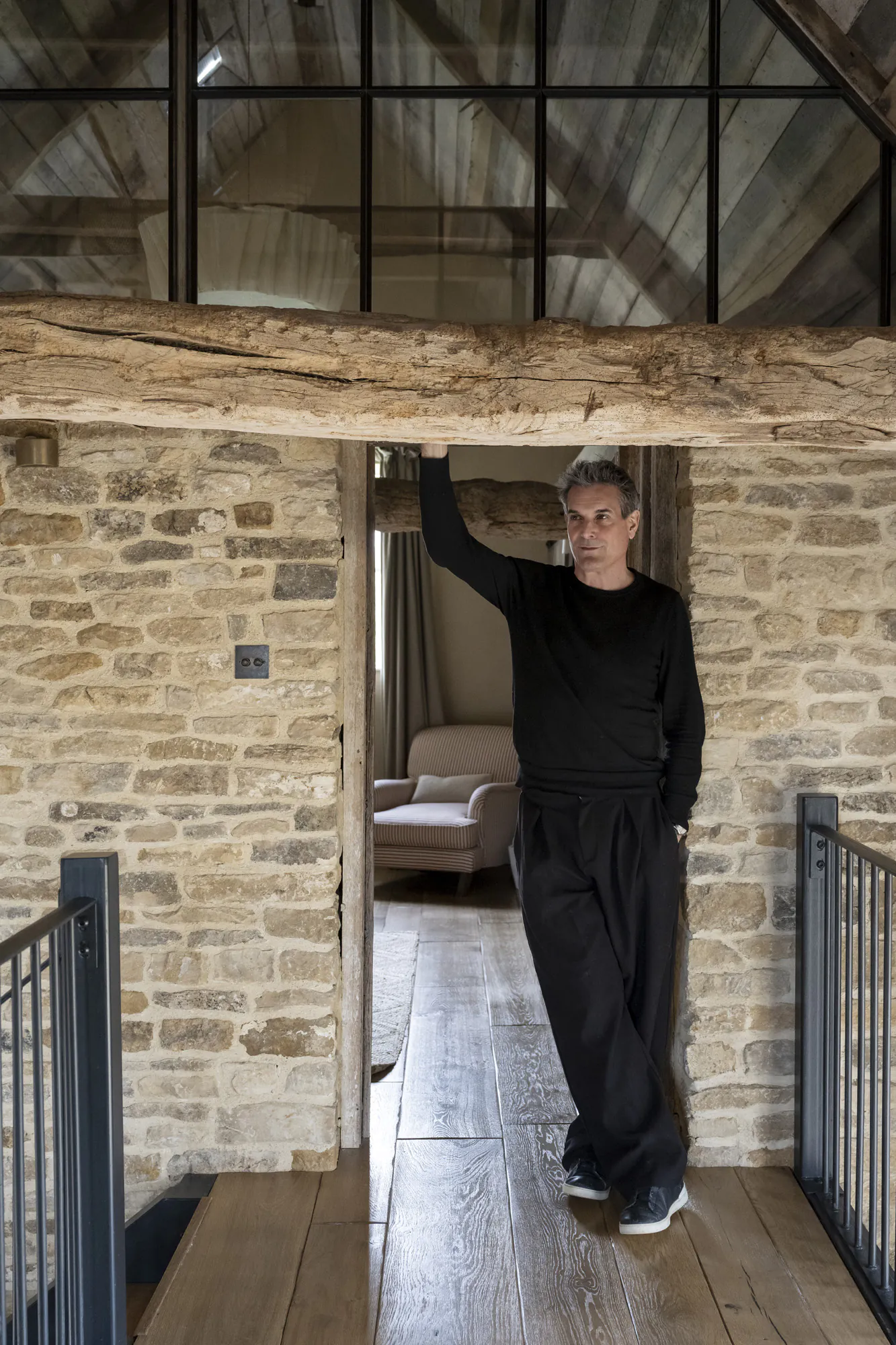
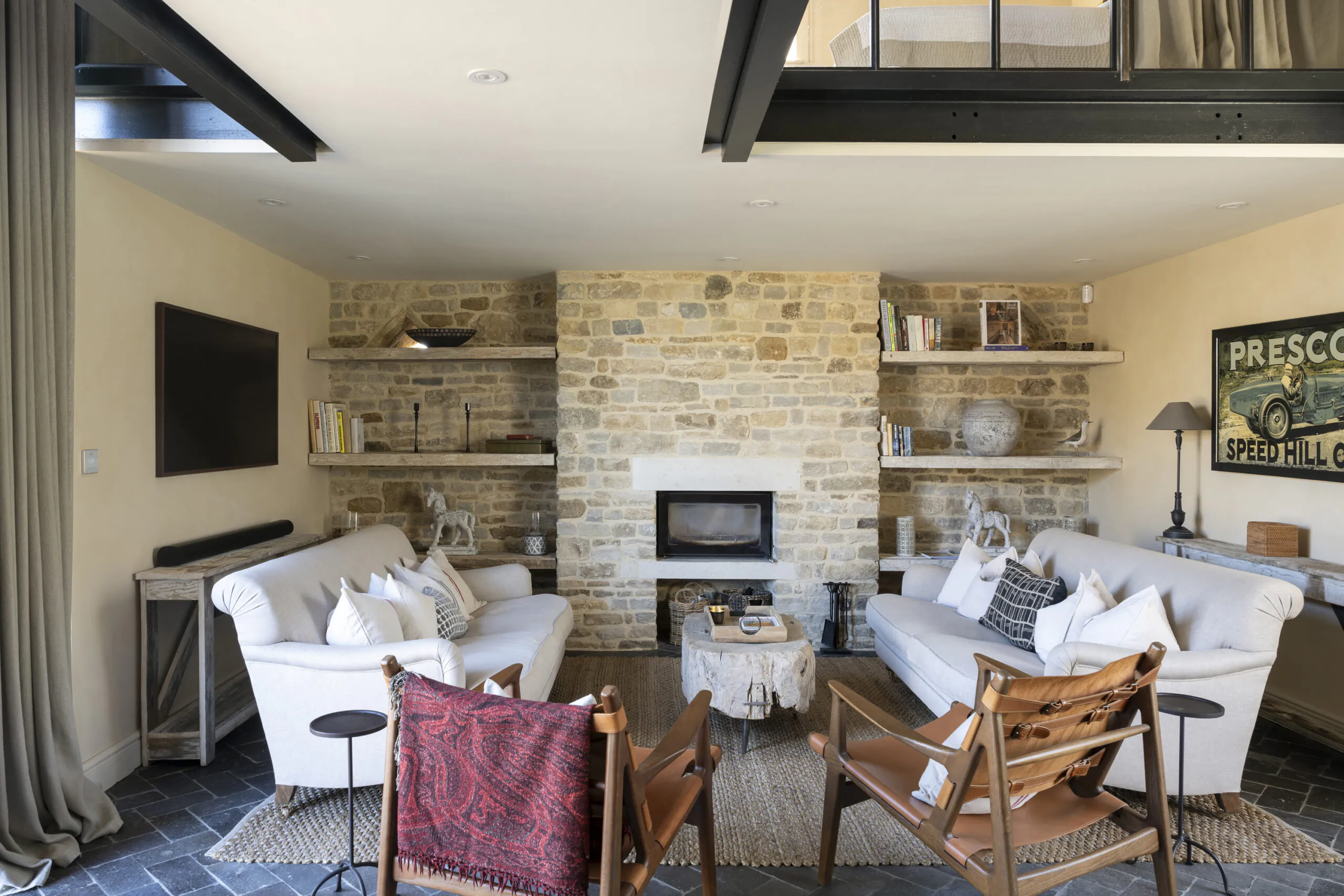
Meanwhile, the stone barn demanded a different approach. Rather than subdividing or domesticating the volume, the design leans into what made the building compelling in the first place. “The sense of space is invariably what attracts people to living in a barn,” Michael says. “Yet it’s something that’s often lost in conversion schemes. We try to preserve what makes a space special and enhance it.”
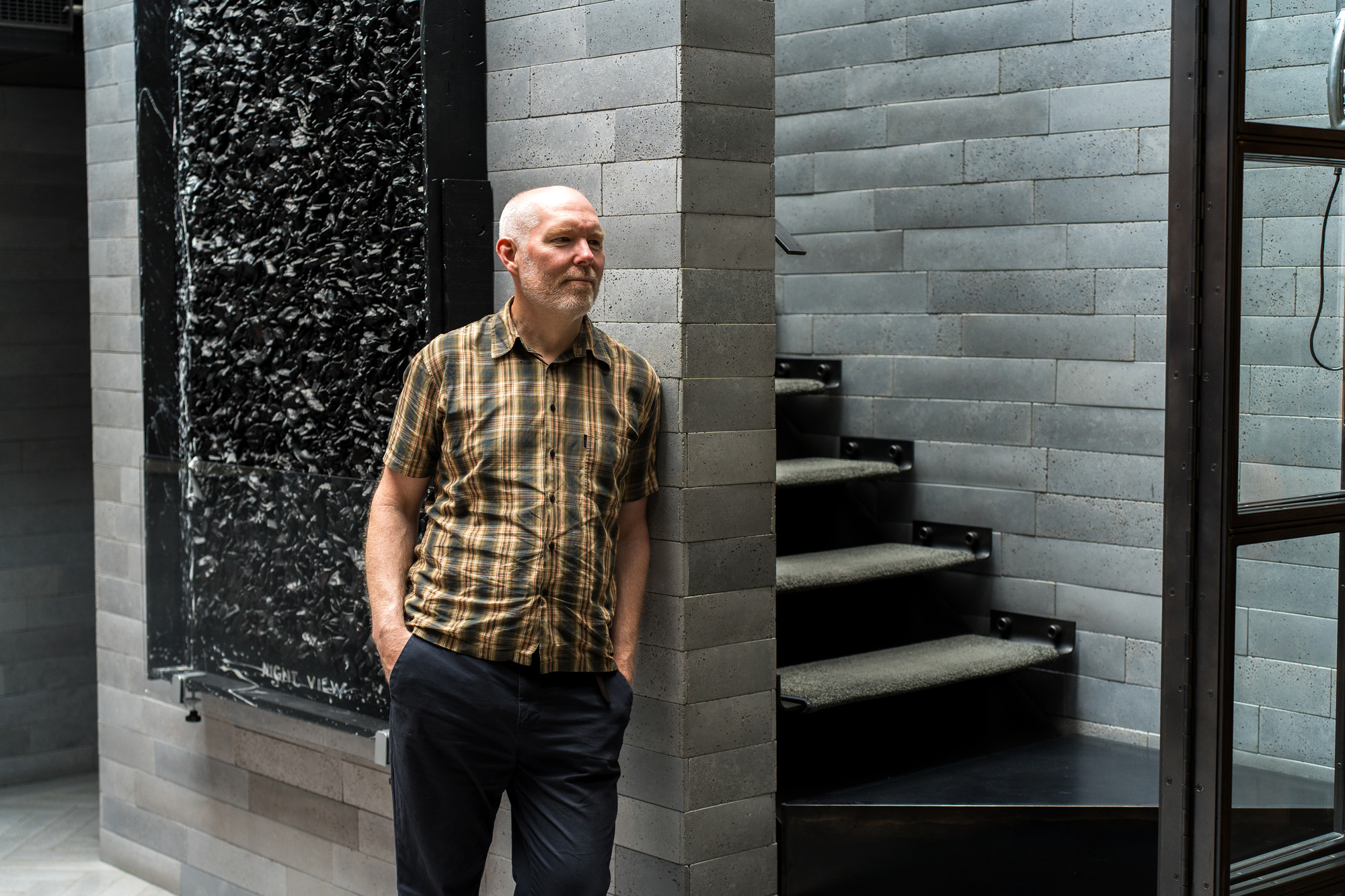
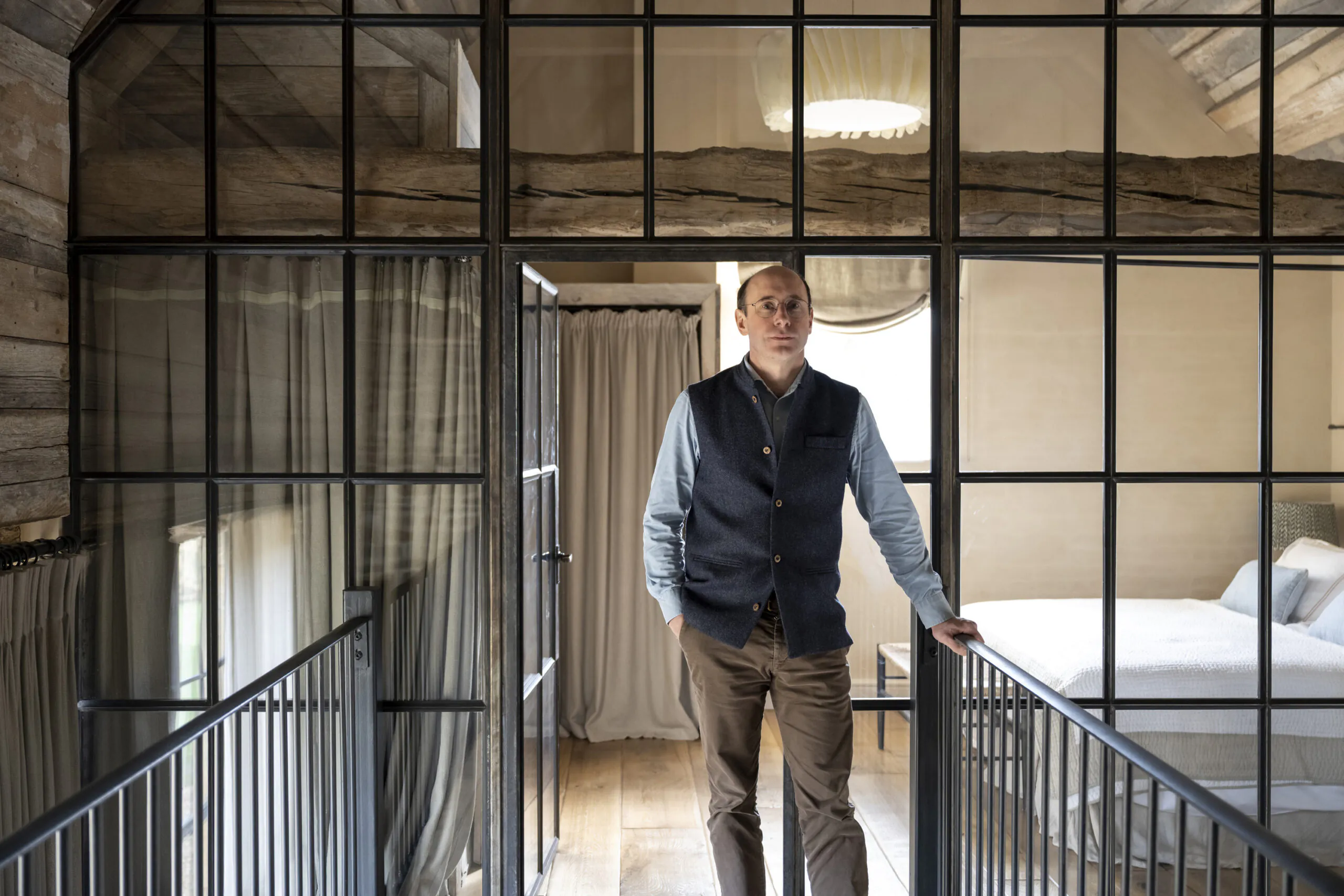
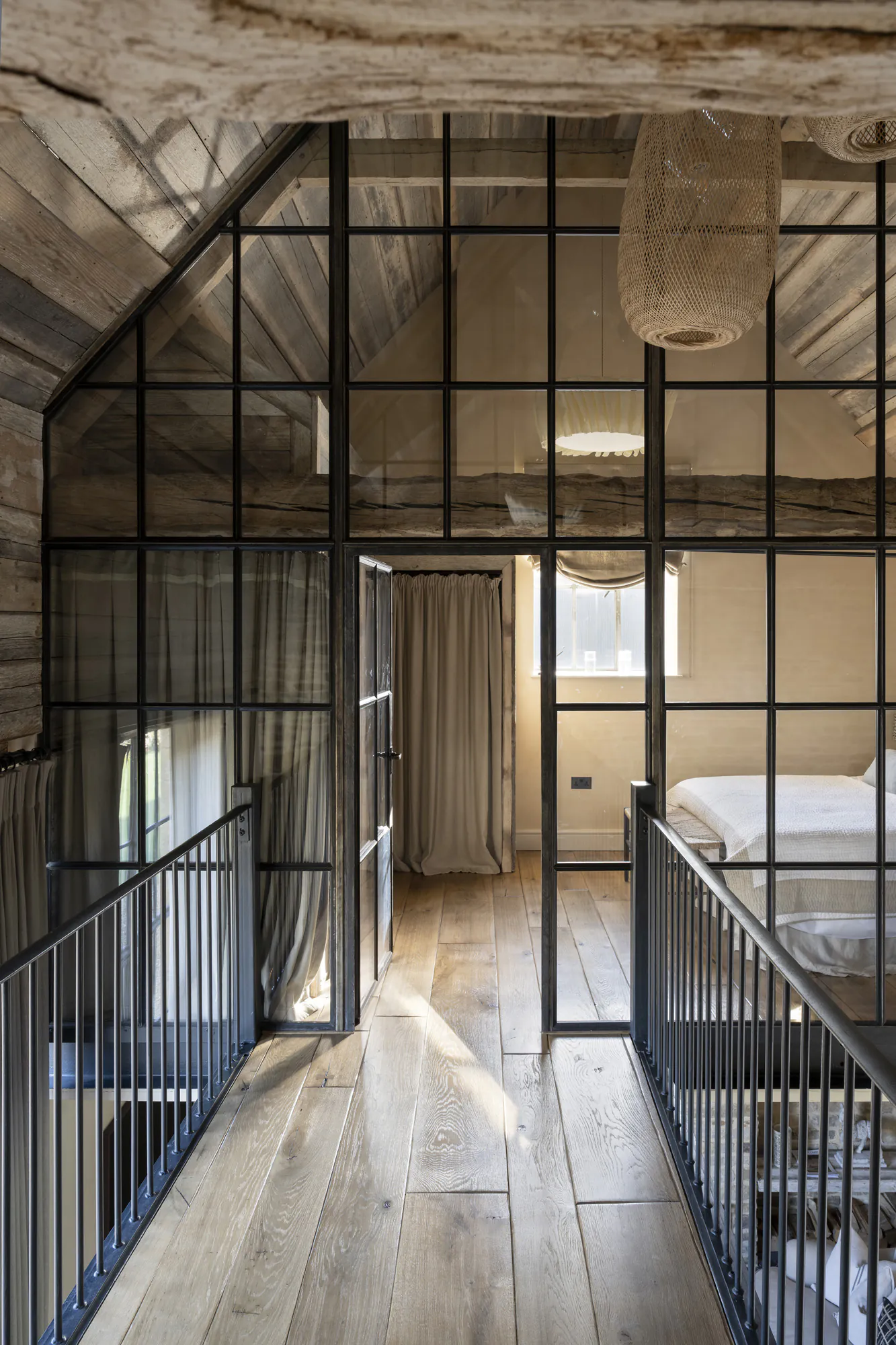
The double-height interior is now animated by a steel staircase and bridge landing that cut cleanly across the space. From this elevated walkway, the full sweep of the ceiling is revealed, while glazed partitions allow natural light to move freely through the building. “Craftsmanship is as important as the selection of materials,” Michael adds. “We want our work to enhance what we find or blend in seamlessly.”
Across the estate, the choreography of gathering and retreat is carefully considered. Ten bedrooms are distributed across the four buildings, allowing different groups to stay together while still having their own space. As Jonathan notes, Latimer Farm was never intended to operate as a conventional rental property, but as a place for extended family holidays and long-term, generational use.
Michael shares that vision. “I love the idea that three or four family groups can each have their own house or barn but still come together for communal occasions in the Dutch barn.”
In agricultural conversions, steel windows feel inevitable. Simple, functional and utilitarian.
Michael Ergatoudis
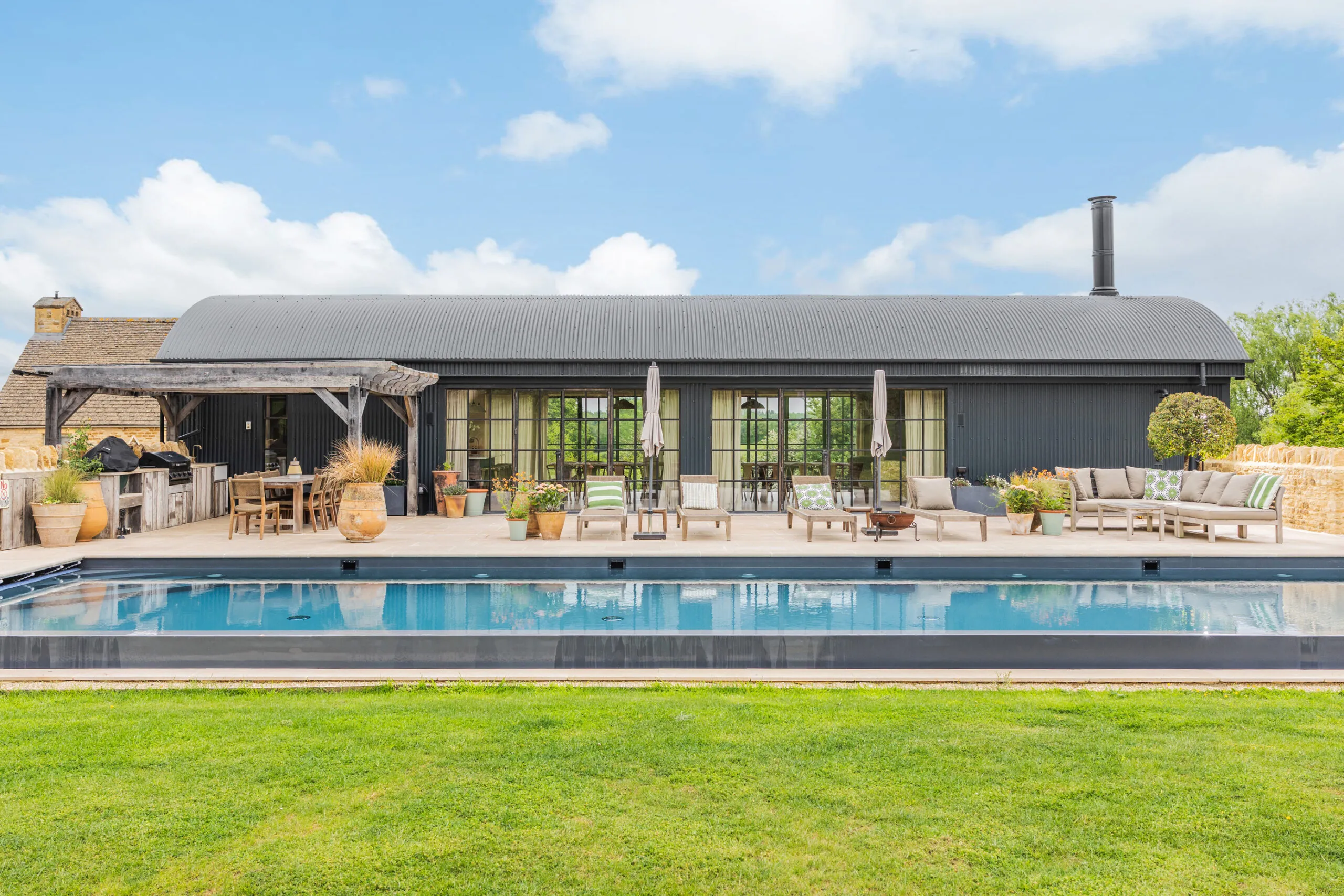
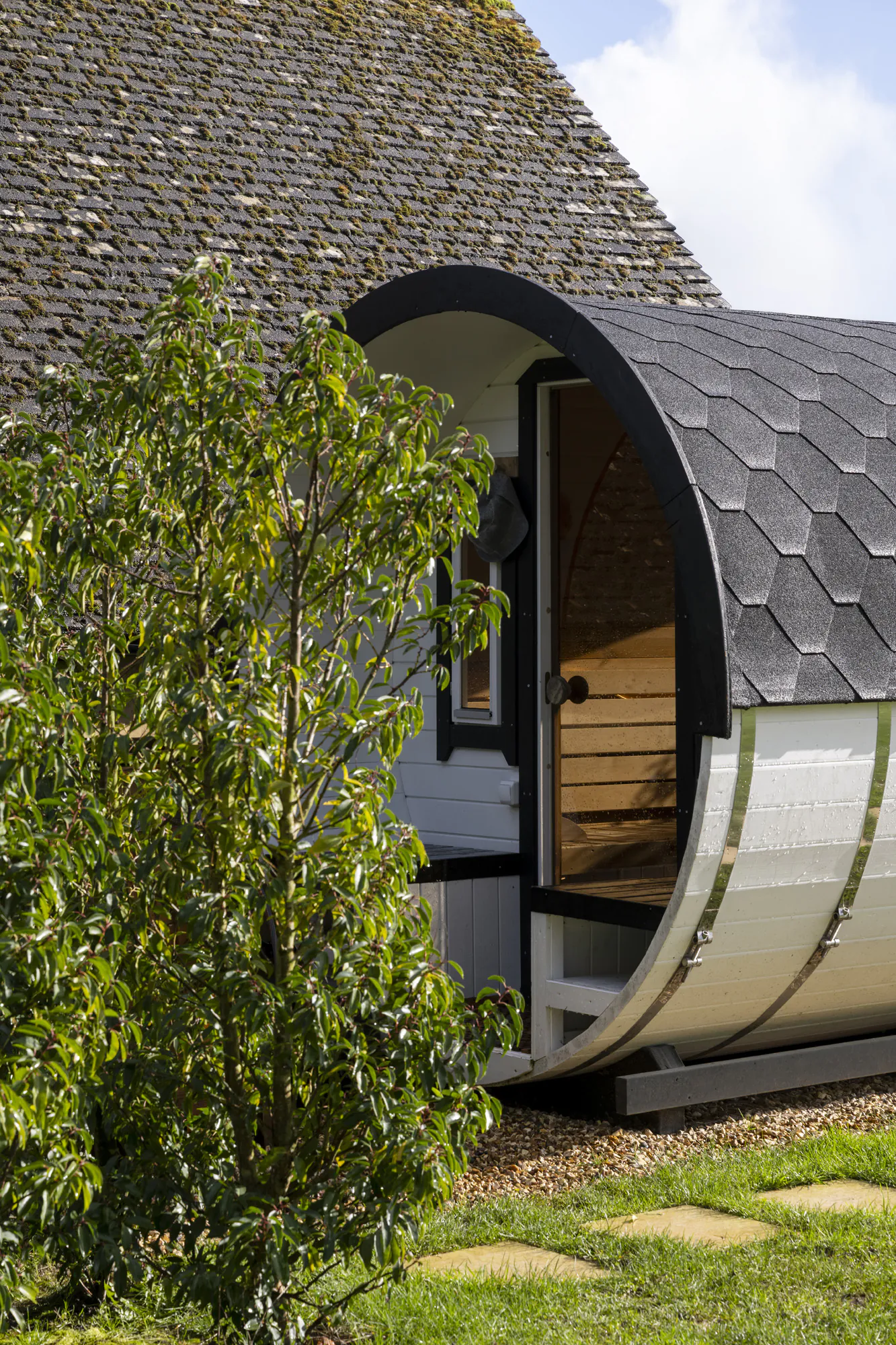
There are, of course, moments of leisure: a 16-metre heated pool, sauna and cold plunge, an astroturf tennis court, gym and steam room. But the design is less about amenities than atmosphere. “The infinity pool enjoys views across the Cotswold national landscape,” Michael notes. Even the most contemporary additions remain grounded in their surroundings – fruit trees, a walled rose garden and gently undulating lawns.
That sense of ease extends beyond the estate gates. “Visitors are spoiled for choice with great pubs and scenic walks,” he adds. A short drive leads to Daylesford Farm Shop, a touchstone of modern Cotswold living, while members may drift towards Soho Farmhouse. His personal recommendation, however, is Chastleton House – “a vast family home dating back centuries, frozen in time during the English Civil War”.
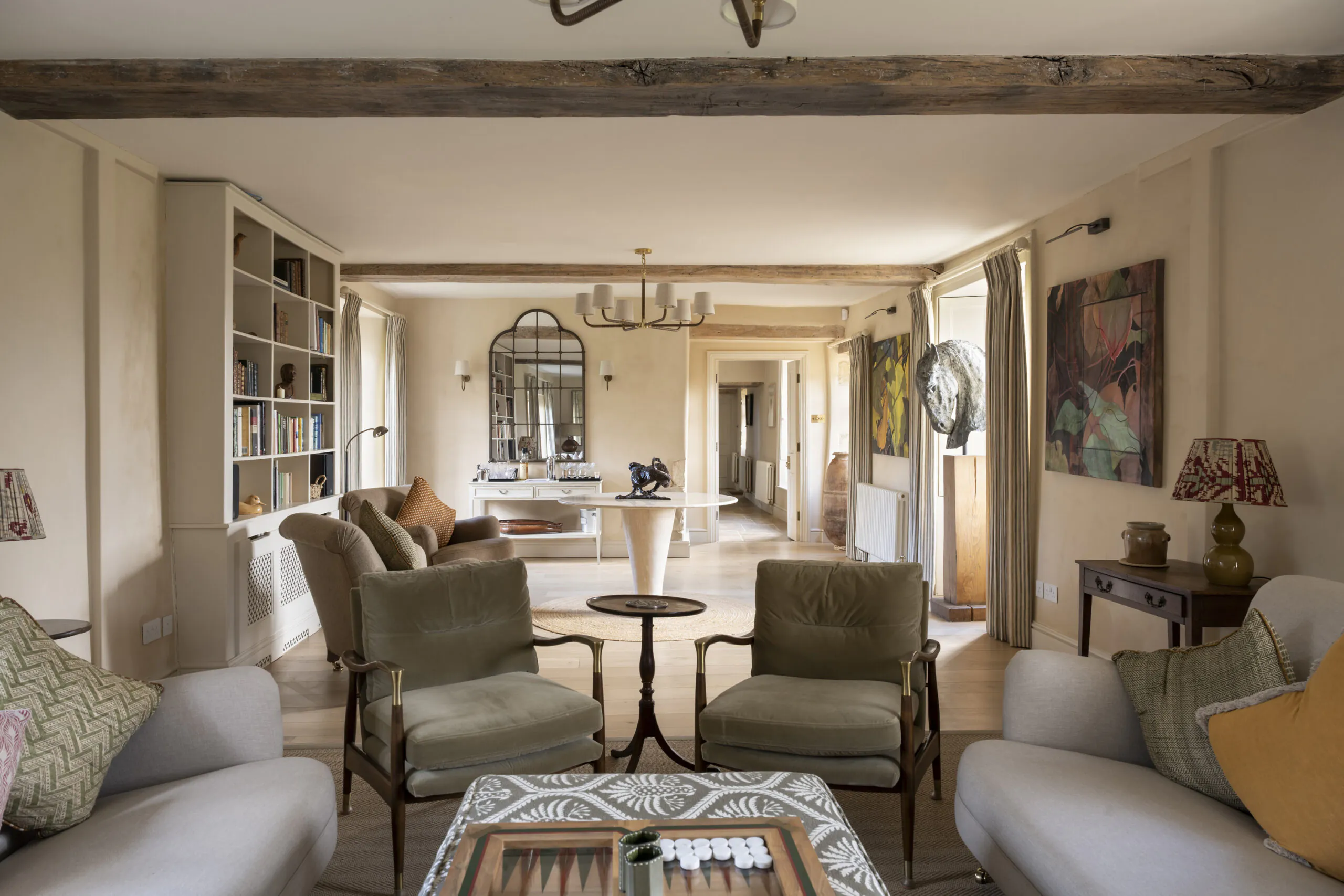
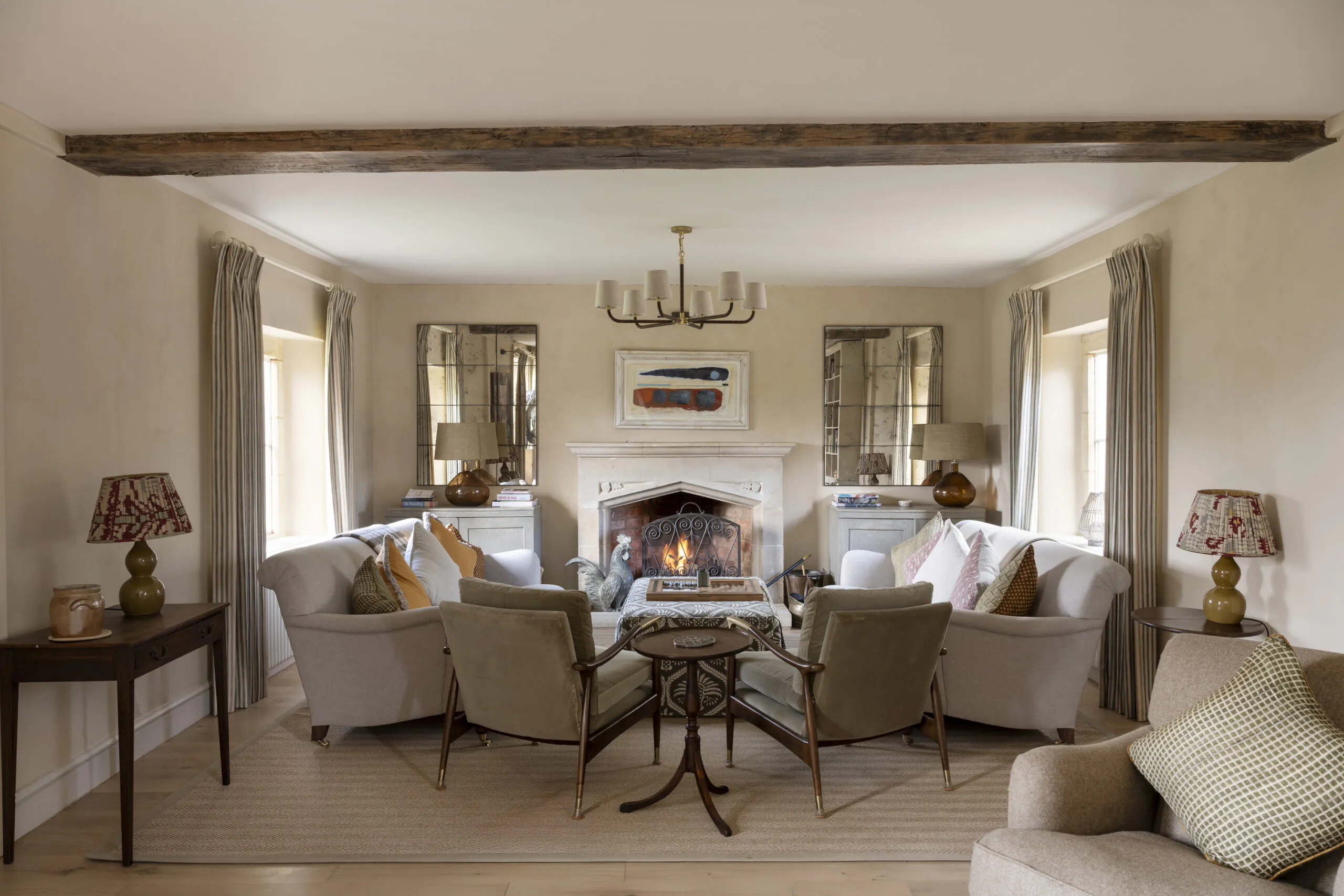
Jonathan imagines a stay unfolding in similarly cinematic fashion: a morning walk to St Nicolas’ church in Oddington; an afternoon browsing antiques shops in Stow-on-the-Wold; perhaps a visit to Giffords Circus when it rolls into town each summer. Then, as evening falls, dinner in the farmhouse drawing room, the fire lit and conversation stretching late into the night.
Latimer Farm shows how a countryside conversion can be done well: a listed building reimagined for modern family life by local designers who understand its history, materials and landscape – and who have created a home that quietly reflects the Cotswolds’ enduring rhythms of togetherness.